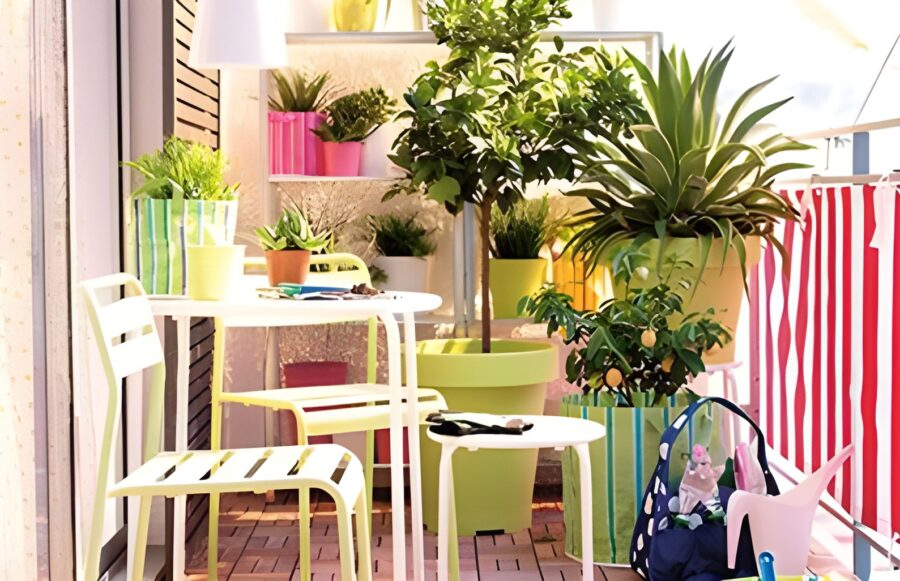
For most city dwellers, a garden at home is an “unfulfilled dream”. With the right design for your balcony, though, you can come close to capturing the feeling of one.
The atmosphere and energy of a “green” balcony have the power to change our mood, helping us see life in a more meaningful and optimistic light. With spring now at its midpoint, it is a good time to create beautiful arrangements that will bring their own colour to our outdoor space, however small it may be.
What should you pay attention to when starting a balcony project? With our choice of plants and materials, it is important to bring the colours and scents of nature as close as possible to our daily lives in the city.
Quite easily and at relatively little cost, we can turn an empty, cold balcony into a small green oasis.
The choice of plants is certainly a personal one, but it is also important to consider the needs of the plants themselves (light, water, weather conditions), the space we have available (how large the plants we choose will grow, how big the pots need to be), their appearance (whether they flower, and how often, and whether they stay green all year round) and ourselves as their carers (how much care they need, how often they need watering, whether they need pruning, how hardy they are, and so on).

Of course, we cannot know all of these details for every plant that we like and are thinking of hosting on our balcony. But we can turn to a specialist, who will advise us on whether a plant is suitable, or ask the staff at garden centres, who can tell us whether the plant that has caught our eye is likely to survive in the setting where we want to put it.
Some of the plants commonly used on balconies and terraces are:
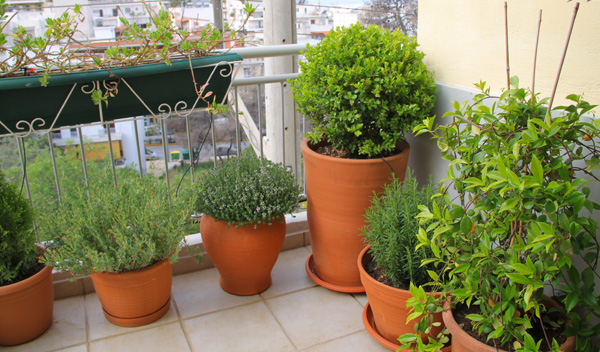
Aromatic herbs: Basil, mint, spearmint, parsley, dill, rosemary, rose geranium, thyme, sage, lemon balm
Annuals: violets, daphnes, zinnias, calendulas, ornamental peppers, nasturtiums, marigolds, coleus, daffodils, pansies, petunias, primroses, fuchsias, freesias, salvia (scarlet sage), celosias, snapdragons, chrysanthemums,
Herbaceous and shrubby plants: dwarf angelica, aucuba, spider plant, cotton lavender, gardenia, geranium, osteospermum, Chinese hibiscus, ivy, coral plant, nephrolepis, dwarf broadleaf fig, dwarf pine (Pinus mugo), dwarf picea, portulaca,
and deciduous shrubs: buddleia, Syrian hibiscus, cassia, dwarf lantana, nandina, lilac, vines.