The holidays are almost upon us, and one glance around at the houses, streets and shops is enough to see that a good part of the magic and atmosphere of Christmas is something we “owe” to the lights, coloured or not, that decorate them. Christmas lights flood every corner of the city, creating just the right mood and atmosphere to welcome the new year.
There are plenty of options on the market for lighting outdoor spaces: Christmas curtain lights, rope lights and light sculptures.
To choose the lights that will bring out the personality of your home:
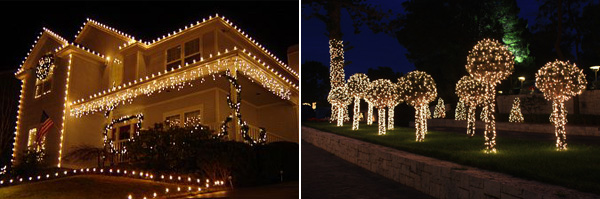
– Start from the overall style of your home. Is it an apartment in a modern block, a country house, a neoclassical building, an old apartment block, a traditional house? The lights you choose should complement its look. For country houses, for example, it is usually best to decorate the whole perimeter of the roof, the fences and the entrance path. For apartment blocks and neoclassical buildings, you can use multiple “lines” of lights along the main architectural features of the building, as well as on the columns and railings.
– Walk around your neighbourhood and “borrow” ideas that catch your eye. It is nice to have some consistency in Christmas decorations, as long as you don’t copy your neighbour’s style exactly.
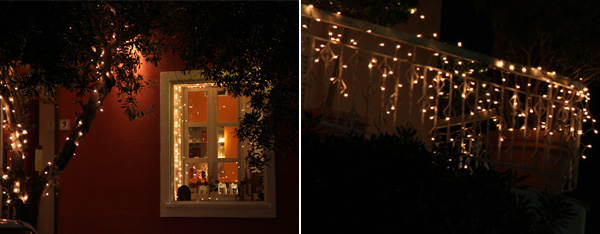
– Make use of ideas you see in shops to dress the inside of your windows (in many cases these are the work of professionals, who certainly know a thing or two more). The decoration inside the windows becomes a very important part of the image your home presents from the outside.
– Buy the materials you need: lights (always waterproof ones for outdoor use), power strips, extension cords, rubber or plastic accessories for hanging and fixing them, and so on.
– Before you start installing, plug in the lights and check that they all work. Avoid “repairing” faulty bulbs yourself – it isn’t worth the risk of a short circuit.
– Check where the sockets that will power the lights are located.
– Use a stable ladder and, preferably, install the lights with the help of a second person. Fix the accessories that will hold the lights in place. Begin by putting up the lines at the highest points, e.g. the roof, and work your way down. Secure the strings of lights one by one. Take care to keep the cable as close to the walls as possible, so that it is protected from the weather.
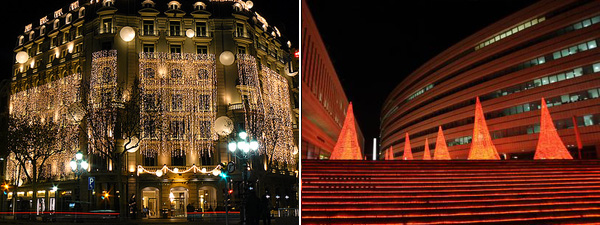
– Once you have finished installing the lights step by step, switch them on and move away from the house to take in the overall result, exactly as others will see it from a distance. Check that the effect is even, ask for a second opinion, and you’re ready!
Move on to the other features of the house. Railings and columns, where you have them, can be decorated with garlands (real or artificial) on which you then place the lights. The garlands will help keep the lights from slipping.
Deciding on the details
1. Coloured or white lights?
For a more classic style, choose white lights, which create the feel of fresh snow. Coloured lights grab the attention and weaken the other decorative elements.
2. Calling in the rope lights
Rope lights are an alternative to traditional string lights. They come in white shades as well as a wide variety of colours. Whichever colour you choose, rope lights are ideal for lighting a path, the entrance to an apartment block, and so on. Thanks to their length they are fairly easy to install, something you will appreciate when you have a large area to cover.
3. Next up: small trees, shrubs and plants
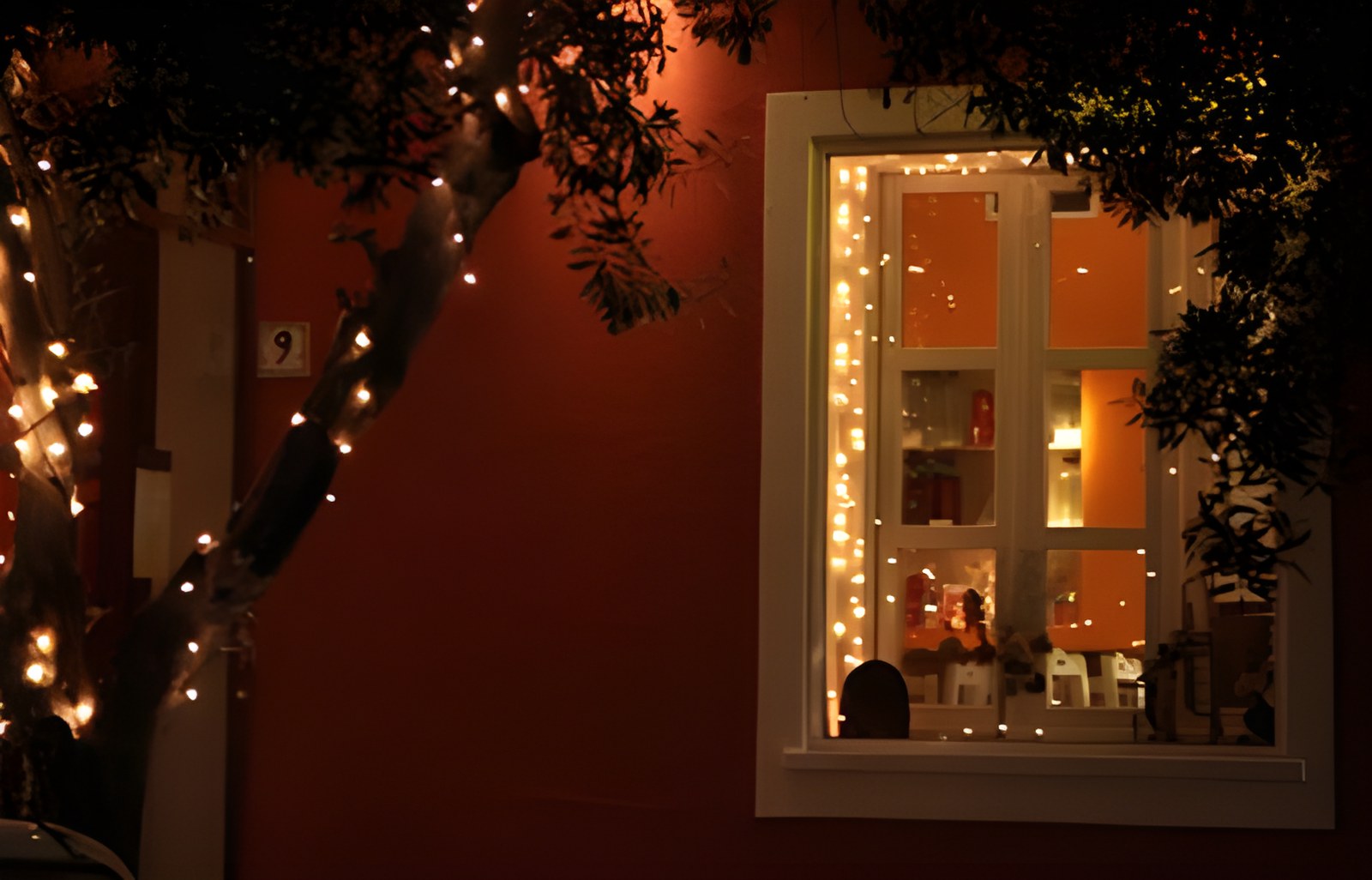
Drape strings of lights over the trees, choosing a single colour, since a monochrome look suits this kind of decoration. Coloured lights on plants can make your terrace and garden feel “busy”, which is best avoided.
And a useful tip!
As remarkable as the way Christmas lights lift our spirits is the way they push up our electricity bill, experts point out.
One way to limit energy consumption over the festive period is to replace ordinary Christmas lights with LEDs (Light Emitting Diodes). Besides the fact that LEDs look brighter and more brilliant when grouped together, they are clearly safer for this use, as they are extremely resistant to changing weather conditions.