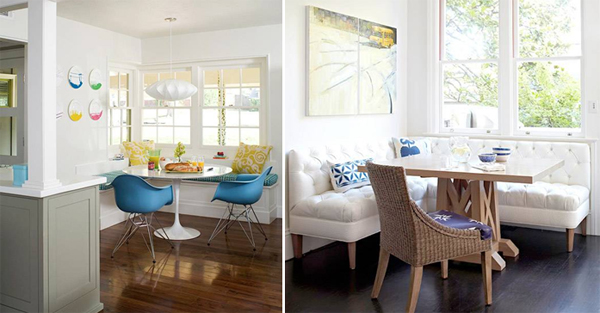
Many of us may remember village houses, or our grandmothers’ homes, where the kitchen had a divan or a bench with cushions along one side of the table and only a few chairs on the other. Perhaps it was because families were larger, or because the kitchen was where everyone gathered. Either way, bench seating was very common, as it met the practical need to fit more people around the table, even in a small kitchen.
In English, these benches are called “banquettes”, a term derived from the German word for “little bench”. Furniture historians trace the existence of banquettes back to 17th-century France. At that time they were used mainly by royal families, as seating beside window embrasures, and were covered in luxurious upholstery and cushions (Source: homeimprovement.lovetoknow.com).
Today the solution is less common, but we are seeing it more and more in new homes, both traditional and more modern, as people try to make the most efficient use of the kitchen space.
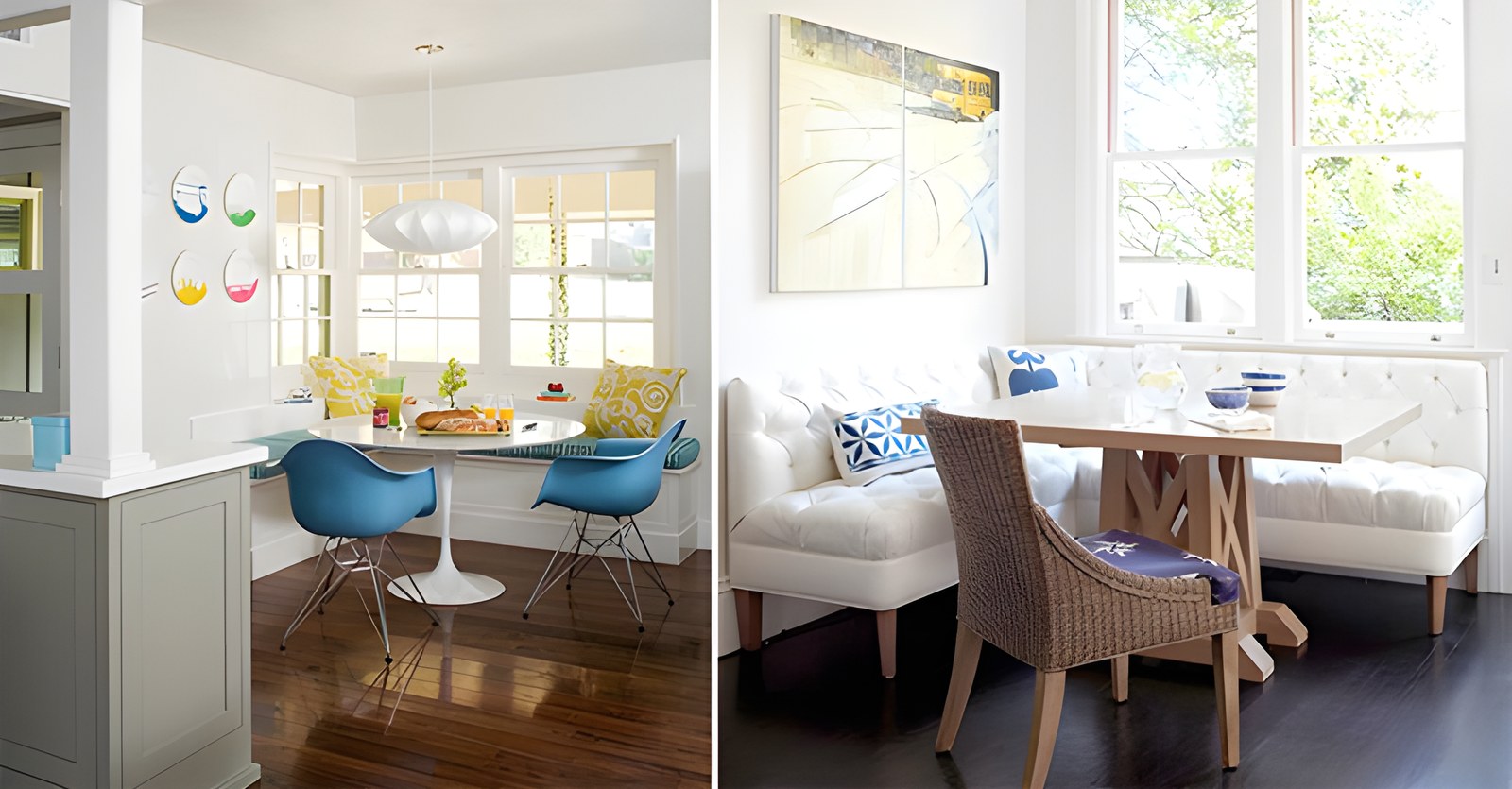
If, for example, there isn’t enough room to pull chairs out from the table, a banquette can be very practical. In most cases, banquettes also offer storage space beneath the seats, which is an added advantage. Another feature worth considering is that the cushions can come in different patterns and colors, giving you the chance to complement the décor of your kitchen perfectly.
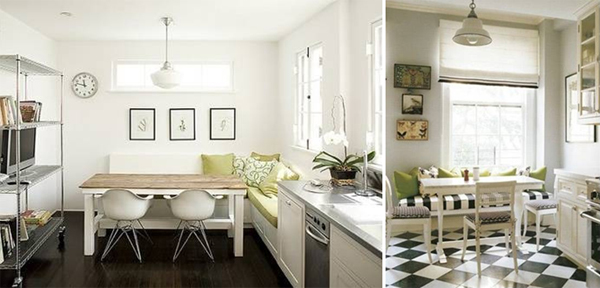
In many cases banquettes are U-shaped, while in others they provide the seating along one side of a square, rectangular or even round table.
What to keep in mind:
• Depending on the layout of the space, you need to decide whether the banquette will be a focal point of your kitchen or act as a divider, a transition between the kitchen and the rest of the room.
Allow for roughly 4 to 6 people in an area of 2 sq m.
• Seats should be at least 45 to 50 cm above the floor, and each person should have at least 60 cm of seating width.
• Don’t make the seats too deep, as people sitting there will find it hard to reach things on the table. Ideally they should be around 45 to 50 cm deep, and if you also use a cushion for the seat back, it is a good idea to factor that in too.
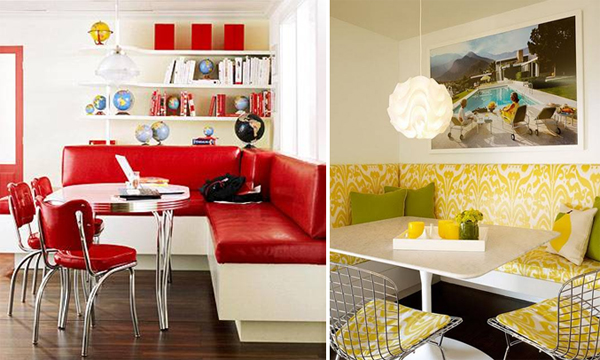
To help you assess this option for your own kitchen table, we have gathered a few ideas for inspiration.



Text: Natasa Lianopoulou