Electric lighting is a major item in global energy consumption, considering that an incandescent lamp converts only 10% of the energy it consumes into light, releasing the remaining 90% into the environment as heat.
Fluorescent lamps are roughly 6 to 8 times more efficient than incandescent lamps and have a much longer lifespan. They would therefore seem to solve the problem above, but the mercury they contain causes significant pollution when it ends up in the environment. LED lamps, for their part, do not yet provide the light output needed for widespread use. Other types of discharge lamps (e.g. sodium vapour or metal halide), which are clearly more efficient than incandescent lamps, are now widely used for lighting large outdoor areas, street lighting and so on, but because of their particular characteristics they could not be used for interior lighting.
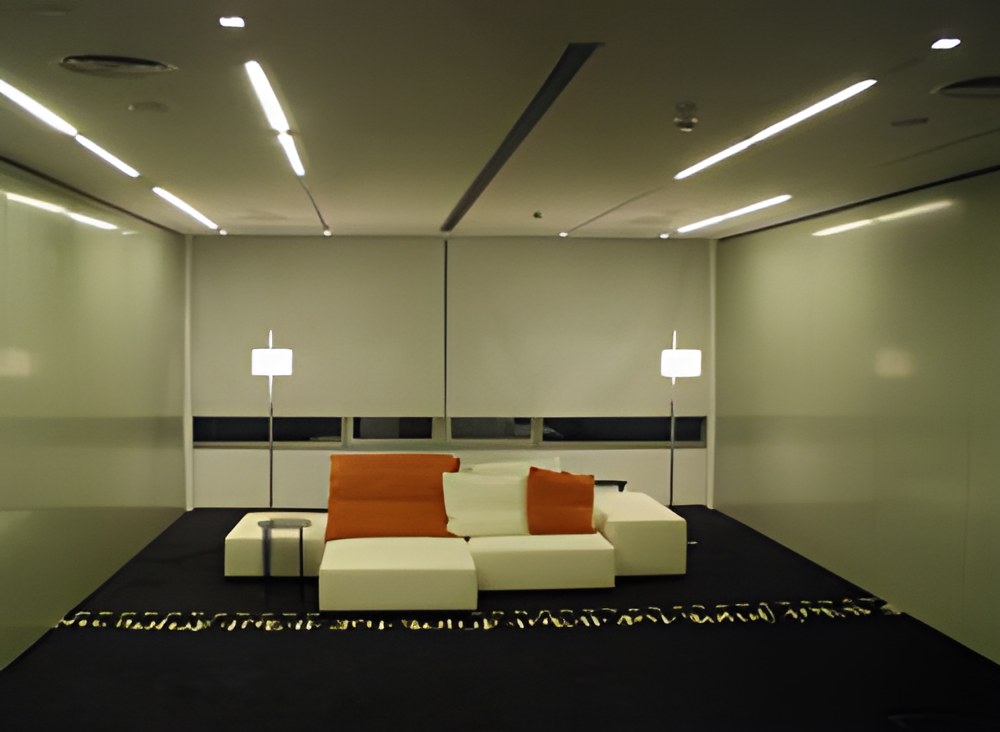
For interior spaces, one solution that makes sense in many respects is the use of dimmers in the lighting.
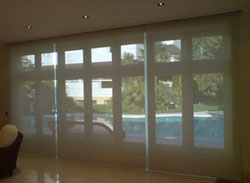
For many years dimmers were associated with creating the right atmosphere through lighting, without any energy saving, since ordinary rheostats allowed only part of the electrical power to reach the lamps and dissipated the rest as heat in the resistor they contained.
Over the last decade, as technology has advanced, ordinary rheostats have been replaced by modern dimmers which, using electronic components, provide significant energy savings as well as light-level control. It is also worth noting that using a good-quality dimmer greatly extends lamp life, which reduces both the maintenance cost of the lighting and the environmental pollution caused by “burnt-out” lamps ending up in the environment.
Studies by the American company LUTRON have established the following relationship between the reduction in the output of incandescent lamps when digital dimmers are used, the energy saved and the increase in lamp life:
Reduction in
light output
Reduction in
consumption
Lamp
life
10%
10%
2 times longer
25%
20%
4 times longer
50%
40%
20 times longer
75%
60%
> 20 times longer
Research by the same company has shown that if just one dimmer were used in every home in the USA, electricity costs would be reduced by around $230,000,000 a year. In addition, this would cut CO2 emissions by 1,950 million tonnes every year, equivalent to the pollution caused by 370,000 cars.
Daylight is another factor that affects energy consumption in homes and workplaces. Clearly, to a certain extent the diffusion of natural (solar) light into a space reduces the electricity needed to light it artificially. At the same time, however, particularly in the summer months, the sun’s rays entering a space increase the heat in it, so that energy-hungry air-conditioning systems have to be used even more to maintain the desired temperature. Proper control of daylight can nevertheless yield unexpectedly positive results in the effort to reduce energy consumption. The external roller shutters commonly used in homes and workplaces do increase security against break-ins, but they are not suitable for controlling daylight properly, since they are opaque and awkward to use, especially when operated manually.
Fabric blinds prove more effective: with the right choice of fabric and proper use, they contribute significantly to reducing energy consumption. Fabrics considered suitable for this purpose are those that allow light to diffuse, or even allow visibility, while greatly limiting ultraviolet radiation and, with it, much of the heat entering the space. As a result, there is less need for artificial lighting during the day (and therefore less of the heat it produces), while the space is also spared the large thermal loads that come from solar radiation.
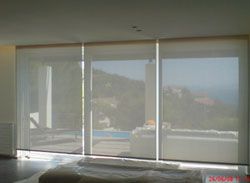
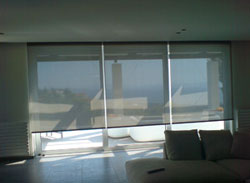
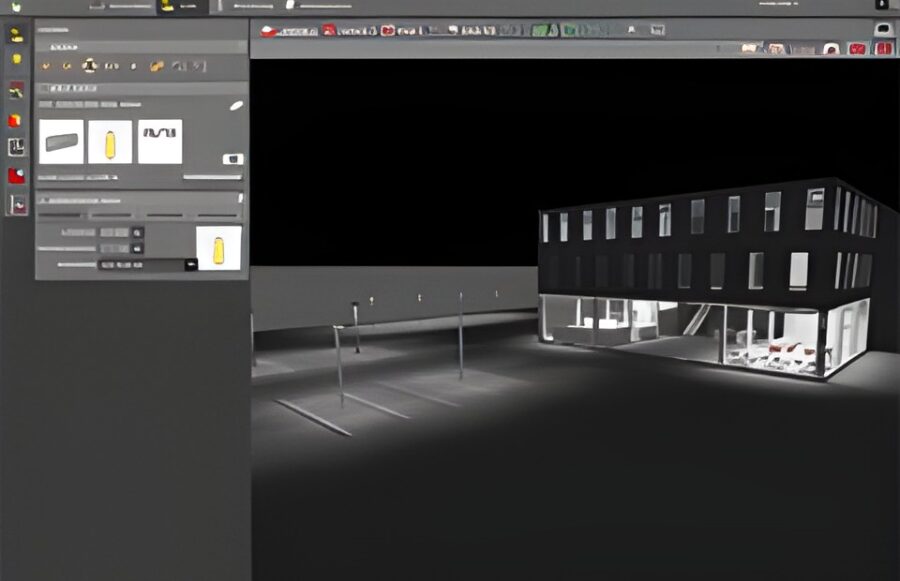
From the above, it is easy to see how effective a programmable central lighting control system (for both natural and artificial light) can be when combined with suitable dimmers and blinds in an office building or a home. Among other things, such a system offers central control of the lighting from any point in the building, or remotely; automatic control of daylight according to the time of day, the season and so on, or according to the intensity of the outdoor light (e.g. raising the blinds shortly before sunset, when the sun’s rays no longer enter the space, or when it is overcast); and the maintenance of a constant light level throughout the day in work areas by combining natural and artificial light in the best possible way.
In general, with proper programming such a system can become an important tool for reducing energy consumption. Consider, too, the wider capabilities a good control system can offer: creating different lighting scenes depending on how a space is being used at the time, or on the time of day or season; running programmed functions without human intervention; and, in general, being easily adapted to each user’s requirements. It then becomes clear that with the right lighting control systems, saving energy no longer requires sacrifices but goes hand in hand with comfort and a better quality of life.
Spyros Verginis
Design Engineer – Electrical Engineer
FOSS S.A.