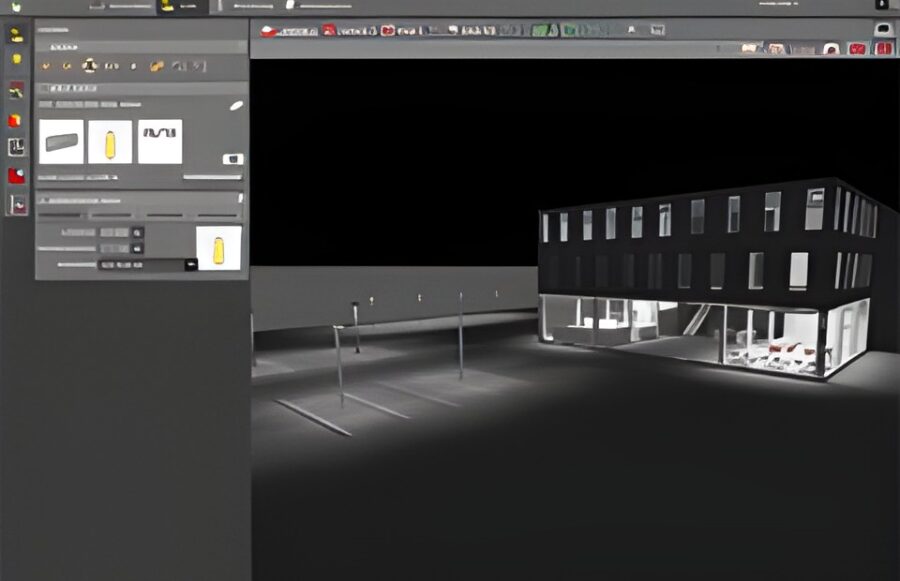
Put simply, DALI (digital addressable lighting interface) is a two-way communication system that brings digital technology to lighting. As an international communication standard, DALI defines the commands that ballasts recognise and carry out, provided they support the protocol. The system allows the user to communicate with each ballast individually, via a DALI controller or a PC running dedicated software.

It works like a computer network with IP addresses: the ballasts pick up the messages addressed to them and execute them. For example, imagine the command “Switch off the lights in room 2”. The lights in room 2, knowing that they belong to room 2, simply switch off. DALI systems are now available for luminaires with a variety of lamp types.
There are two different protocols for operating DALI: Class 1, which works within a single circuit, and Class 2, which requires external wiring. In our opinion, the impressive one is Class 1, which requires no changes to our existing electrical installation, only the addition of the relevant equipment. In other words, the information travels over the existing power wiring, carried by a low voltage of 0-10V.
The idea for the system originally came from a ballast manufacturer in Europe around 15 years ago. Later, three more companies in the sector joined forces with the first to draw up a standard for the International Electrotechnical Commission (IEC), with the aim of establishing standards for ballast communication protocols. About six years after that, the United States also became involved in the concept. DALI was accepted as an international protocol in 2002.