Whether you simply want to refresh the space or set up your living room from scratch, it is worth taking a little time to think about how the furniture will be arranged.
It is quite important to think about exactly how the room will be used. Is it where you relax and spend time with your family? Is it the part of the house you only use when you have guests? Does it combine both?
If you ask yourself a few questions about how the space functions, you will have a better idea of how this may affect your decision about the furniture layout, and therefore the seating.
Do you want the seats to face a wall, or to be placed opposite each other to encourage conversation? Is the room for adults only, or will children use it too? Is there a television in the living room, or do you have a separate “media room” for watching films, listening to music and playing video games?
What you need to consider is how many seats you normally need for yourself and the people you live with on a day-to-day basis, and then where there is room for extra seats should you need them.
The options available to you include the following:
• Corner sofa: the advantage of a corner sofa is that it is a multi-purpose solution that can comfortably serve families, as it offers many different configurations. These pieces often include built-in surfaces for drinks or storage space for your books. They also come in modular options that let you fit them to the room exactly, combining a few extra seats with backs, without arms, or with longer sides.
• Three-seater and two-seater sofas: Sofas are an effective solution because they can seat several people at once. That said, it is worth remembering that the middle seat of a three-seater is not usually popular with most people. So if you don’t often have many guests, it is best not to rely solely on large three-seaters, but to combine a three-seater with a two-seater, what are known abroad as “loveseats”. Two-seaters are more practical in this respect; after all, two people will usually sit more comfortably on a two-seater than on a three-seater.
• Chairs: Chairs are comfortable and freestanding, and provide seating for individuals. They can have a distinctive design and add a touch of colour and character to the room. They can also give you an extra seat without the need for bulky furniture. Still, try not to get carried away and fill a living room with chairs alone, as the room will look “busy”, and even if the chairs match, they will look scattered.
• Armchairs and chaise longues: These are ideal for open-plan homes, as they usually offer alternative back positions or arm supports, and can be placed as part of the seating area without cutting it off from the rest of the space.
Usually, a single living room furniture range offers all of the above alternatives in the same design: a three-seater sofa, a two-seater sofa, an armchair, chairs, a stool or a chaise longue. Obviously you can’t combine all of them in one room unless you have a fairly spacious one, and even then it is best avoided.
So study how the room will be used, decide what feeling you want it to convey, and, together with the plan you made for the room during the preparation phase for your purchases, decide which pieces you really need.
Here are a few examples and observations on how functional different furniture layouts are:

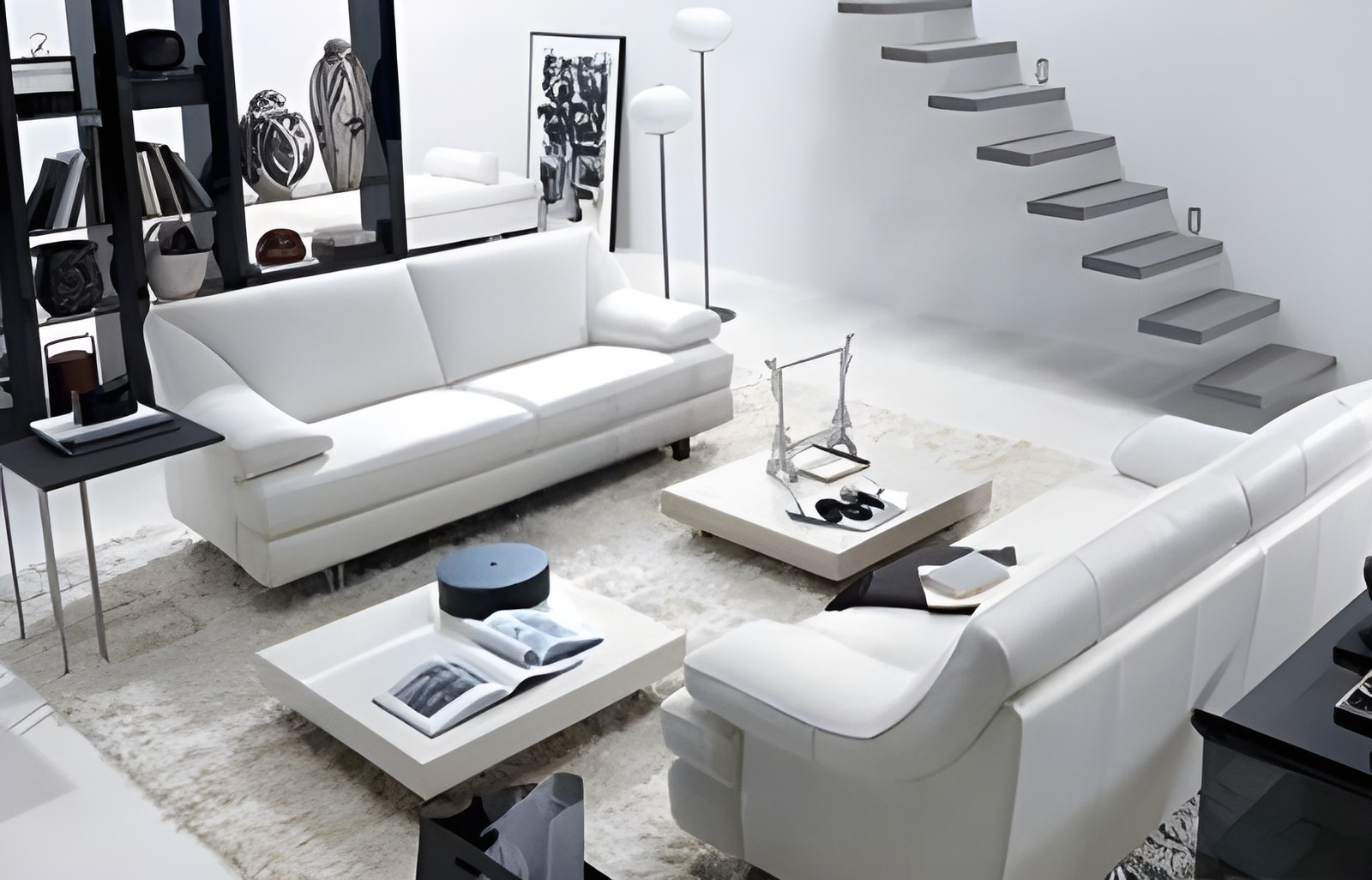
An idea from Natuzzi, spotted on www.nabuzz.com
Here the sofas do not face a television. Their arrangement suggests that, for the owner, the living room is a place for gathering and conversation. The sofas are positioned to face each other, showing that this is what the people sitting on them want too!
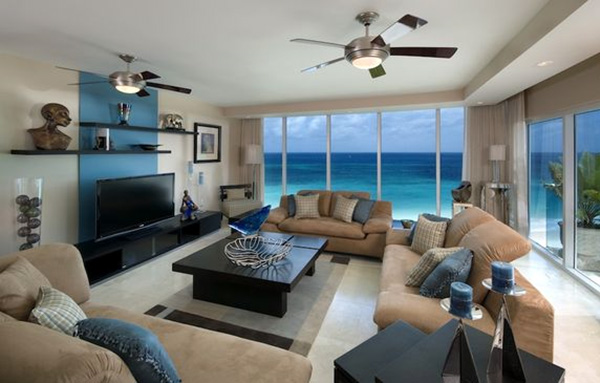
Photo: archdecors.net
A spacious living room with plenty of seating and a variety of pieces: a two-seater sofa, a three-seater sofa and a chaise longue. The room can accommodate quite a few people, but the furniture layout keeps them apart rather than bringing them together.
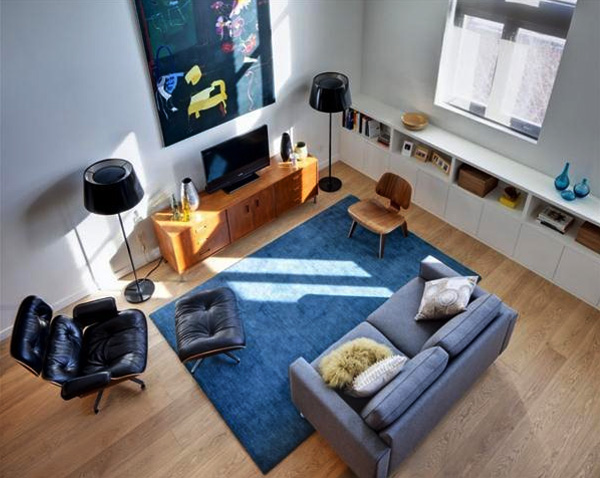
Photo: onhomedesign.com
A contemporary living area in a home in Toronto. This layout suggests a bachelor pad. You can see that it is not especially “welcoming” to guests. It can meet the everyday needs of one or two people, and gives the living area the feel of a “private space” for the owner’s moments of relaxation, rather than a place to share with friends.
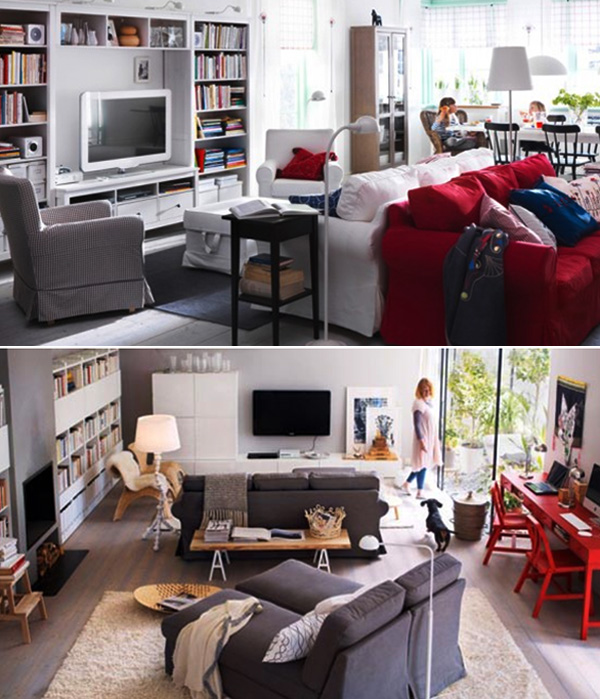
Photos: ikea.gr
A mix and match of armchairs and sofas from IKEA, for a living area with a flexible layout that suits both those who want to watch television and those who want to kick back and chat without the TV at the centre of attention.