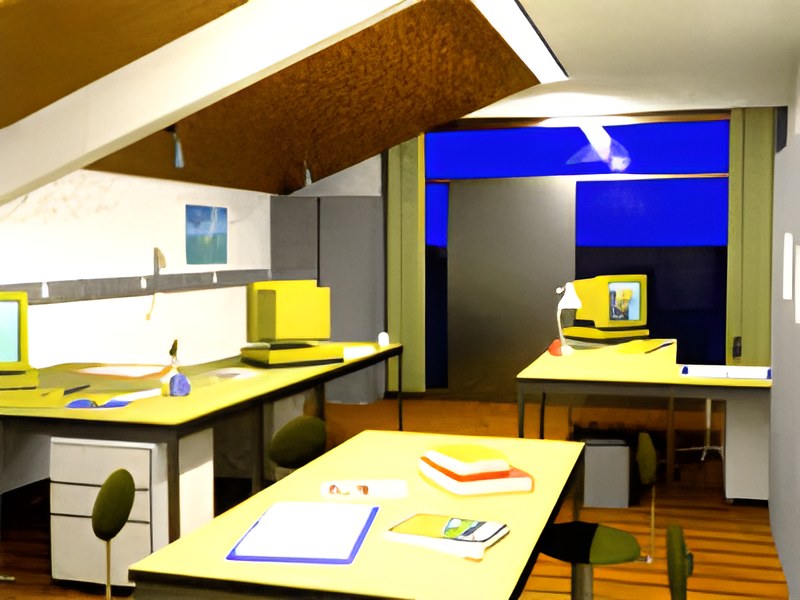
The parameters we need to take into account when designing the lighting for an office space are the amount of light received on a surface (lux), the glare produced by the luminaires, the absorptivity of the surfaces, the colours and, last but by no means least, the aesthetic we want to create.
To achieve a successful result, the designer must weigh all of these factors together, shaping the final picture in their mind.
We would like to explain a few things about the parameters mentioned above, so that it is clear how and why they shape the final result.
Lighting workspaces is a difficult task, and it varies from case to case. Too much light, meaning more than 500 lux, washes out the colours on the computer screen, so that we can no longer see it properly. It also reflects off the sheets of paper we are reading, tiring our eyes.
On the other hand, graphic designers need considerably higher levels in order to work, up to 1500 lux!
Spaces such as meeting rooms, reception areas and corridors, however, should never need more than 250 lux.
Strictly speaking, the lighting designer should even take the age of the employees into account, because a 55-year-old naturally needs almost twice as much light as a 25-year-old. This is because, over time, the cornea thickens and turns yellow, which reduces the intensity of the light reaching our optic nerve.
In workspaces, we should keep the lighting as flat as possible, with variation of no more than 20%! As we noted in an earlier article, this is because changes in the amount of light tire the human brain, which is constantly trying to adapt.
In our next article (29/6/2004), we will continue with the parameters we have not yet covered.