The Ecclesiastical Museum of the Holy Metropolis of Thessaloniki is not a secular museum, and it should not be experienced as one. It aims to present the theological perspective of its collection and to convey the atmosphere of the natural setting of the exhibits: the sacred church.
On the other hand, it is ultimately a museum, in which sacred objects are displayed to be understood and appreciated, not used in worship. The key architectural decision was therefore to create a space that combines both of these characteristics: one with an ecclesiastical atmosphere as well as the features of a museum.
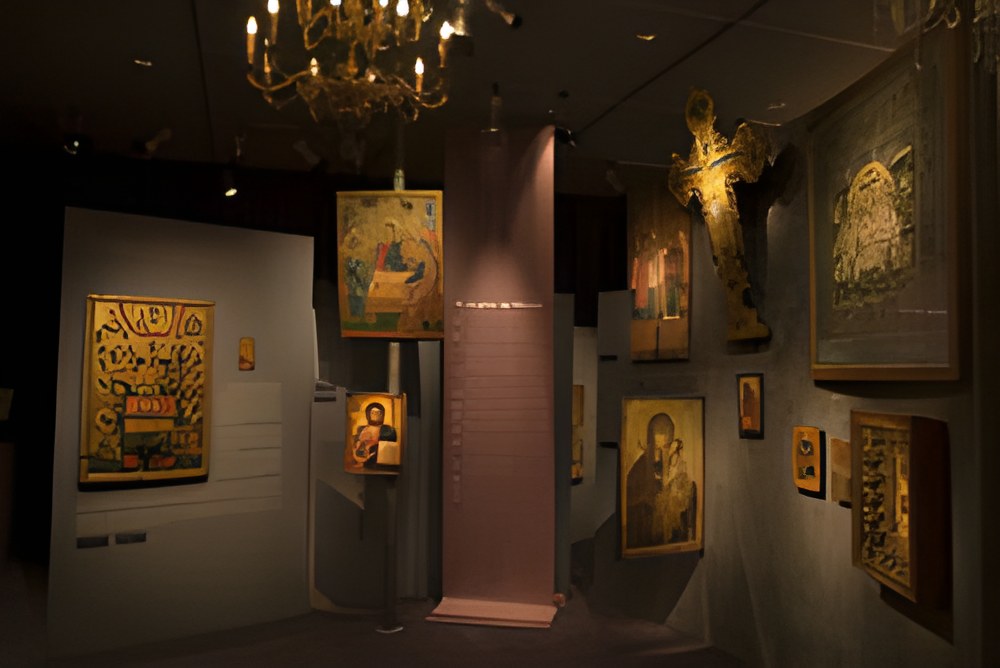

Among the means used to achieve this, lighting played the leading role. It was used to evoke, as far as possible, the reverent atmosphere of the Orthodox Church.

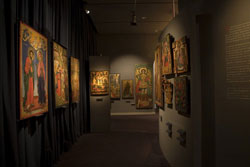
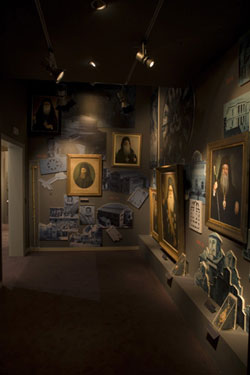
The scheme uses both recessed ceiling luminaires and special spotlights that allow control of beam, intensity, diffusion and colour of the light. This makes the full range of lighting conditions possible, both in the general lighting of the spaces and in the accent lighting of selected icons: for example, emphasising the “inner light” of Byzantine icons, where the light seems to radiate from the holy figure itself, or differentiating the successive meanings of the sections, and so on.

From the ceiling of the central space hang chandeliers in an asymmetrical arrangement, differing in size, material and style and set to a low light level. Although they contribute very little to the general lighting, they make the ceiling spotlights visually and emotionally disappear, reinforcing the intended ecclesiastical mood. Optical fibres were used in most of the display cases and in the ceiling of the “chapel”.
P. Tzonos
Museological Study and Supervision: Matoula Skaltsa, Professor of Art History and Museology, Aristotle University of Thessaloniki
Architectural Museological Study, Supervision and Lighting Design: Tzonos-Hoepfel-Hoepfel OE architectural office