Much of the lighting market has quickly turned to promoting the more energy-efficient LED lamps, relying more on intuition than on scientific findings.
It therefore became necessary to analyse the total environmental impact of an LED lamp over its entire life and compare it with other light sources, since the energy a light source consumes while in use is only one part of its energy footprint.
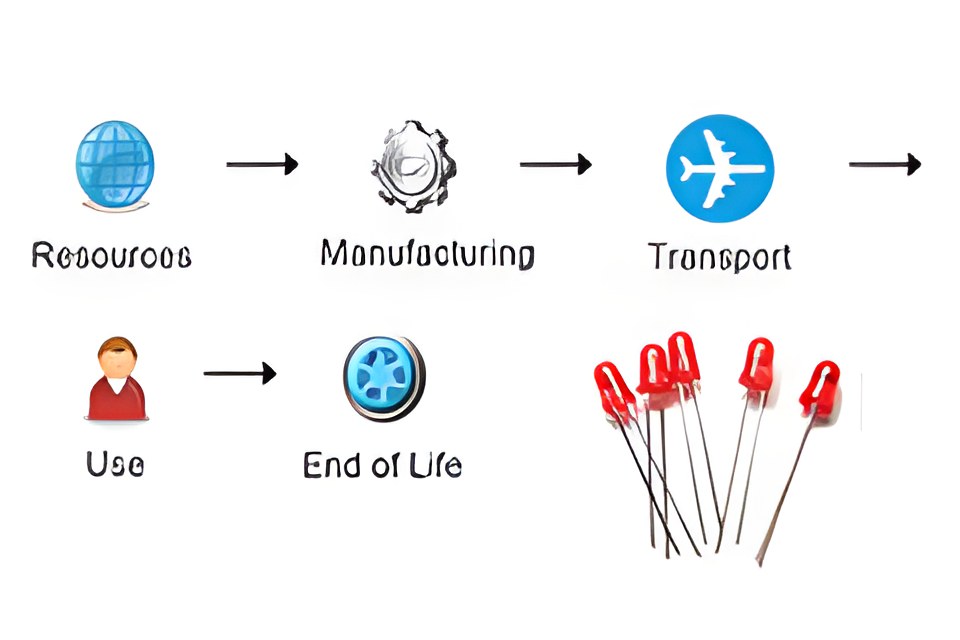
The production and use of LED lamps had to be studied, and their environmental impact assessed by taking into account every stage of their life cycle (raw materials, production, manufacturing and assembly, transport and use). The results then had to be compared with those for an incandescent lamp and a fluorescent lamp.
The research was carried out by Osram (the results were verified by independent experts in the corresponding department at Siemens), and its conclusions turn out not to be far from the “intuition” held by professionals in the field.
The study reached three main conclusions:
The energy needed to manufacture an LED lamp is less than 2% of its total consumption over its lifetime. This disproves the rumour that making LED lamps takes more energy than is saved when they are used.
Incandescent lamps were found to consume around 3,302 kilowatt-hours, whereas fluorescent and LED lamps each use less than 670 kilowatt-hours over their life cycle. This translates into an energy saving of around 80 percent.
Future improvements in LED lamps will reduce the energy footprint further. As the efficiency of LED lamps increases, a higher luminous efficacy in lumens per watt will be achieved.
Technological developments in lighting are expected to be rapid: new products will be launched and others improved. What will remain constant over time, above all else, is the aesthetic value of good lighting.
Text: Giorgos Konstantinidis