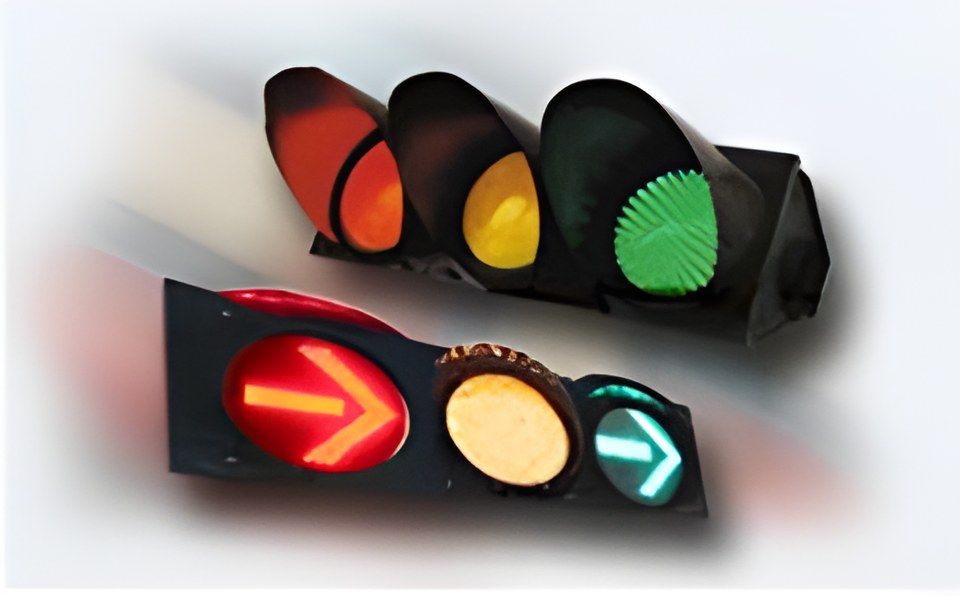
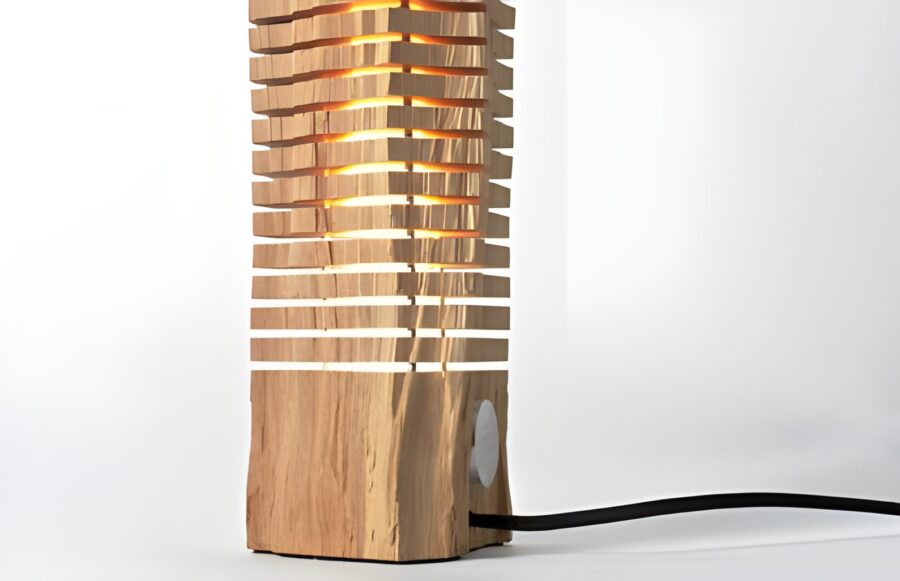
When the material is an organic compound, we are talking about the familiar OLEDs (Organic Light Emitting Diodes). For an organic compound to work as a semiconductor, it must have a large number of double bonds between its carbon atoms, alternating with single bonds. The organic compound could be a molecule with a relatively small number of atoms, in its crystalline form, or a polymer (PLEDs), which offers the advantage of flexibility. For the time being, however, organic LEDs offer lower luminous efficacy and a shorter average lifetime than inorganic ones.
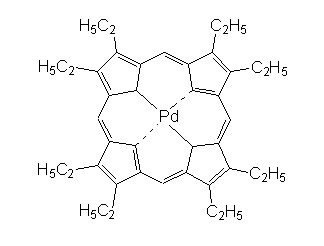
Chemical formula of an organic molecule with double bonds, used in the manufacture of OLEDs.
Light sources of this kind offer many advantages, such as a relatively long lifetime (more than 100,000 hours), high physical durability and low power consumption (for the time being they have a higher luminous efficacy than incandescent lamps). However, their use is not recommended, at least for now, in applications that require high light levels and stable colour or a high colour rendering index.
Their end of life depends on defects in the crystalline structure of the semiconductors or of the phosphor powder. They ignite instantly, and the end of life is marked by a gradual drop in light output rather than a sudden failure, as happens with other types of lamp. Here too there is an equivalent of the choke found in discharge tubes: a current regulator that keeps the voltage low and can run many LEDs at the same time. Unlike discharge tubes, however, the relationship between voltage and current for LEDs is proportional, or in other words positive.
In general lighting applications, a further disadvantage of this type of light source is that during operation (which requires direct current of a specific polarity) a large amount of heat is generated in the rest of the lamp body. The lack of an efficient way to control it currently prevents the manufacture of high-power LEDs.
Although the luminous efficacy of LED lamps exceeds that of the incandescent lamp, their purchase price is much higher. As for how LED lamps compare with fluorescent lamps, LEDs are smaller and more durable but do not yet match the luminous efficacy of fluorescent lamps. For this reason, fluorescent lamps, and CFLs (Compact Fluorescent Lamps) in particular, are the ones consumers who want highly energy-efficient lighting mainly choose.
The fall in the price of LED lamps and the continuing improvement in their luminous efficacy will certainly mean an enormous change in the lighting market. Even now, LEDs are the preferred choice where high brightness levels are not essential and their advantages are valued: long life, durability and vivid colours (signage and traffic lights, indicators, decoration, architectural lighting, car brake lights and others).
LEDs used for signage.