If your clients doubt how worthwhile or useful it is to light the exterior path leading to the entrance of their home or holiday house, you need only remind them of a few important reasons to reconsider:
• According to real estate specialists, exterior lighting improves the look of your home and increases its value.
• It makes things safer for your visitors and family members by helping them see where they are stepping as they walk.
• It contributes to the overall security of your home.
The good news, moreover, is that exterior lighting is a project that clients can easily carry out themselves, since it is simple to install and does not even require the help of an electrician.
Below, we offer some useful tips on choosing and installing exterior lighting.
Planning the installation
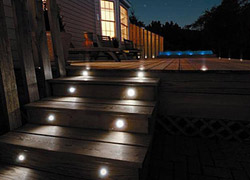
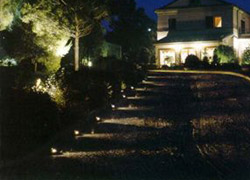
For the best lighting result, plan in advance where the exterior luminaires will be installed, or encourage your clients to do so. Don’t install them at random. In fact, it is best to place the luminaires along one side of the path, so as to avoid the “airport runway” effect. After all, even a single row of luminaires will provide plenty of light. Finally, make sure you have planned to install lights at least at the start of the path and, if there are steps, close to each step for better visibility.
Installation
First, when it comes to choosing luminaires, make sure you select weatherproof ones designed for outdoor use.
If you opt for low-voltage luminaires, there will need to be an exterior power outlet nearby where the transformer can be placed. Make sure all safety rules are followed to prevent injury to people and animals.
If you use solar-powered luminaires, you simply need to place them in the ground; no other installation is required.
You can learn more about the safe installation of low-voltage luminaires by clicking here.
Switching on
Then there is the matter of switching the exterior luminaires on and off at night. There are various ways of doing this, some of which are listed below:
• Simple switches, which are best installed in easily accessible spots.
• Photocells, which turn the lights on as soon as daylight fades and off again at dawn.
• Motion detectors, which turn the lighting on as soon as someone approaches the path.
• A timer, which turns the lights on at a time of your choosing.
In many cases, there are systems that use a variety of methods to switch the lights on, covering all the bases.