This article explains why the color temperature of a lamp matters and where each type is best used.
Choosing the ideal color temperature
One of the most important factors to consider is the feeling a lamp creates, which depends on its color temperature.
Warm-light lamps are preferred mainly in homes and restaurants, as they create a cozy atmosphere and a sense of comfort.
Cool-colored lamps, on the other hand, are preferred for workplaces and schools, as they promote alertness and vigilance. They also improve visual clarity and perception, even at lower lighting levels. This is one of the reasons they are chosen for lighting supermarkets, since they save energy.
To show how color temperature influences people’s emotional state, here is an example comparing a fast-food restaurant with a luxury restaurant.
In the former, the lighting comes from cool-colored fluorescent lamps, creating a sense of alertness. Eat quickly and leave, so that the next customer can have your seat…
In the luxury restaurant, by contrast, the lighting usually comes from incandescent lamps, which give off a warm color and create a sense of warmth and comfort. That feeling encourages us to stay longer and enjoy the experience.
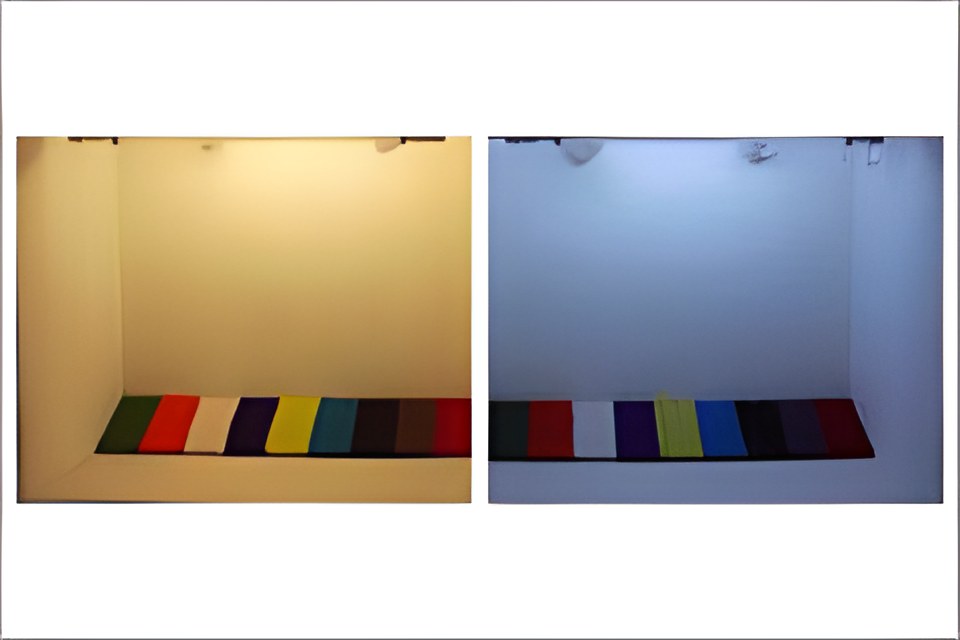
Choosing lamps The colors you have chosen to decorate your space also determine what kind of lamps you should use. Suppose you have a room with strong red features: you would use an incandescent lamp, because it will bring out the red to the fullest.
Fluorescent lamps, on the other hand, bring out cool colors such as blue and green more strongly. If you want to bring out all the colors in a space, you should choose a lamp with a high color rendering (Daylight).
Correlated Color Temperature (CCT)
Correlated color temperature indicates the color spectrum a lamp emits. CCT is measured on the Kelvin (K) scale.
A low color temperature (3000 K) describes a warm source, such as an incandescent lamp.
A high color temperature (4000 K and above) describes a cool source, such as a fluorescent lamp.
Color Rendering Index (CRI)
The color rendering index (CRI) is the unit used to measure quality in terms of a light source’s ability to show the colors of the various objects in a space in the best possible way.
The CRI scale runs from 0 to 100. Older types of lamps had a CRI of between 52 and 62, whereas today’s lamps can reach a CRI of up to 95.
Edited by: Maria Georgiadou