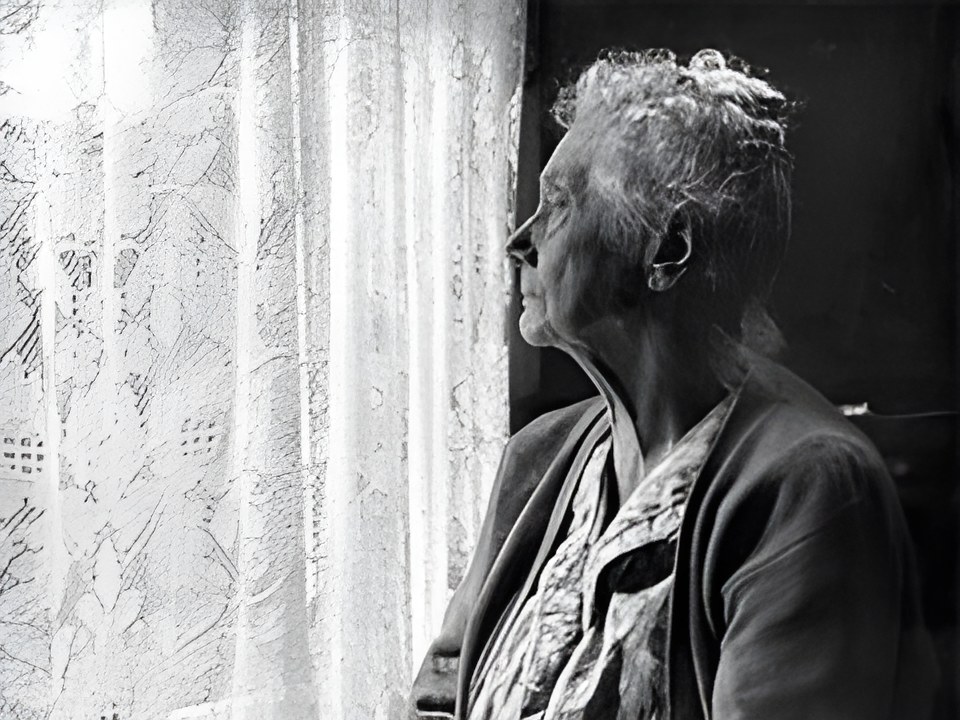
The changes that the passing of time brings to our health concern, to a significant degree, perception, the visual system and the circadian rhythm, which is directly tied to daylight.

Because elderly people perceive space differently, natural and artificial lighting act as a “mood switch” that regulates the sense of safety and belonging that the home provides. This creates a number of problems that lighting professionals are called upon to address, always bearing in mind what is already known: visual experiences matter to everyone, since they carry not only meaning but also emotion. The sense of space is understood more intensely through lived experiences that the individual interprets, combining the recognition of objects with the mood they evoke.
The environment, the surrounding atmosphere, plays an important role in lighting. The “energy of light” acts as a natural stimulus for vision and helps us absorb the experience of a space: how we define a room (its dimensions, proportions, surfaces and materials) and how we use that ability to carry out certain functions or perform certain tasks.
The basic purpose of vision is to provide information about our surroundings. Contrast, in terms of both luminance and colour differentiation, is therefore fundamental to understanding an image and its quality.
As people age, the eyes lose their ability to focus and to distinguish shades and contrasts, shapes, the edges of objects and fine details, and adapting to bright environments becomes difficult. Absorbing a space and the objects in it takes longer, and the sense of orientation weakens.
The alternation of day and night governs the circadian rhythm and is very important to our biological system. The inability to perceive the intensity of light therefore prevents elderly people from perceiving time as well.
As a result, the dimension of space and the flow of time are also affected, which raises important questions for lighting professionals. The aim, then, is to use lighting in such a way that, by creating the right atmosphere, it meets elderly people’s need for a feeling of safety, more than for orientation, and improves the conditions of their lives, which tend to become confined to the home as time goes by.
Text: Mariana Novaes
Source: via-verlag.com
Text editing: Eirini Maraki