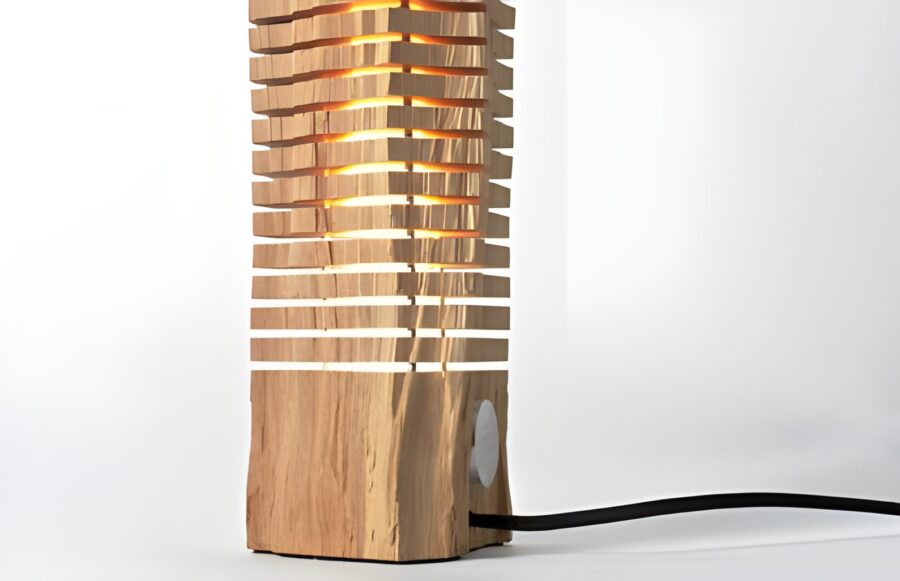
Many in our industry regard LEDs as the future of lighting, and with good reason. Features such as very low power consumption, low heat output and a long service life, together with considerable flexibility in creating effects for decorative and architectural lighting, have made LEDs particularly popular with lighting designers.
What is an LED?
LEDs (Light Emitting Diodes) are a particular type of semiconductor device that emit diffuse light when an electric current passes through them. The result is a form of electroluminescence. The colour of the light an LED emits depends on the composition and condition of the semiconductor material used, and can include infrared, visible or even near-ultraviolet light.
The history of LEDs
Rubin Braunstein of the “Radio Corporation of America” was the first scientist to record infrared emissions from gallium arsenide (GaAs) and other conductive compounds, in 1955. Later, while experimenting in the Texas Instruments laboratories in 1961, Bob Biard and Gary Pittman found that gallium arsenide (GaAs) produced infrared light (invisible to the naked eye) when an electric current was applied to it. It was Biard and Pittman, however, who consolidated these studies and secured the patent for the infrared “light-emitting diode”. The first practical application, with the development of the first visible-spectrum LED, came in 1962 from Nick Holonyak Jr. of the General Electric Company.
What types of LED are available?
The most common type of LED stays lit continuously while current passes through it, but so-called flashing LEDs are also available on the market.
Flashing LEDs look like ordinary LEDs, except that they contain a small chip inside that makes the LED flash instantly at repeating intervals of one second. This type of LED also comes in red, green and yellow. In general, while most flashing LEDs emit light of a single wavelength, various types of multicolour flashing LEDs are also commercially available.
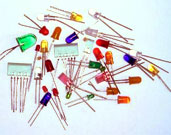
LEDs are produced in a huge variety of shapes and sizes. The 5 mm cylindrical LED is the most common, accounting for an estimated 80% of world production. The colour of the plastic lens is usually the same as that of the emitted light, though this is not a rule. For example, purple plastic is commonly used for infrared LEDs.
LED colours
LEDs were initially available in red and green. Blue LEDs reached the market in the late 1990s. Combined with red and green LEDs, they can be used to produce white light, although white LEDs rarely rely on this technique. The latest developments in LED colours include shades such as purple and pink/fuchsia.
In general, ultraviolet, blue, green, white, pink and purple LEDs are relatively expensive compared with LEDs in the more common colours (red, orange, shades of green and yellow, and infrared LEDs), and for this reason they are used less often in commercial applications. Since 2006, however, the so-called “Chernobyl blue” of blue LEDs has been used as a decorative feature in many products, such as mobile phones, and as a result the price of blue LEDs has fallen significantly.
Advantages of LEDs
As already mentioned, using LEDs offers significant advantages, which can be summarised as follows:
? LEDs draw considerably less current than ordinary lamps. This makes them especially useful in battery-powered devices.
? LEDs can emit light in specific colours without the colour filters that traditional lighting methods require, which further reduces the initial cost.
? The compact package of an LED can be designed to focus the light as needed, whereas other light sources require external reflectors to gather the light and direct it conveniently in a single direction.
? When used in applications that require dimming, LEDs do not change colour as the current passing through them is reduced, unlike incandescent lamps, which simply turn yellow.
? LEDs are built into solid housings that protect them, which explains their long life.
? LEDs have an exceptionally long life: normally around ten years (100,000 hours), which is almost twice that of the best fluorescent lamps and twenty times that of the best incandescent lamps. It should be noted, of course, that fluorescent lamps can also have an exceptionally long life, but only when they are run below their normal voltage, at a considerable cost penalty. LEDs, on the other hand, ensure a long life even when operating at their maximum power load.
? Moreover, LEDs begin to wear out through a gradual reduction in light output, whereas incandescent lamps burn out suddenly.
? LEDs emit clearly less heat than incandescent lamps. ? Finally, LEDs switch on extremely quickly. A simple LED indicator reaches full brightness within a fraction of a second.
Disadvantages of using LEDs
Although LEDs offer many advantages, they also have some drawbacks that designers and buyers should be aware of:
? LEDs are still considerably more expensive than established lighting methods. The extra cost of using them is partly due to their relatively low lumen output and to the need to design a dedicated circuit and power supply for them.
? LED performance depends to a large extent on the temperatures of the operating environment. Running an LED hard in high ambient conditions inevitably overheats its housing and, as a result, damages the device. Adequate protection from heat is essential to ensuring the viability of LED devices.
? LEDs require special and relatively complex power installations in order to operate efficiently.
Following this first introduction to LED technology, in a future article we will look at various examples of its applications, as well as specific case studies of lighting designs from Greece.