Kitchen lighting has become a more complicated matter today than it used to be.
This is because, in most cases, the kitchen is no longer an isolated space used only for household cooking. Instead, it forms part of a single living and dining area and is integrated into its aesthetic, which in turn creates corresponding demands on its lighting.
When planning the lighting for our kitchen, it is important to make choices that ensure it is just as “friendly” as the lighting in the adjoining spaces, and matches it in levels, tones and design.
However important aesthetics may be as a selection criterion, the kitchen remains a functional “workspace”. As such, the demands on its lighting are greater, so that cooking can be done more easily and comfortably, but above all safely.
Worktop lighting
There are various solutions available for meeting the needs above, but what we should look for when buying fixtures is the same:
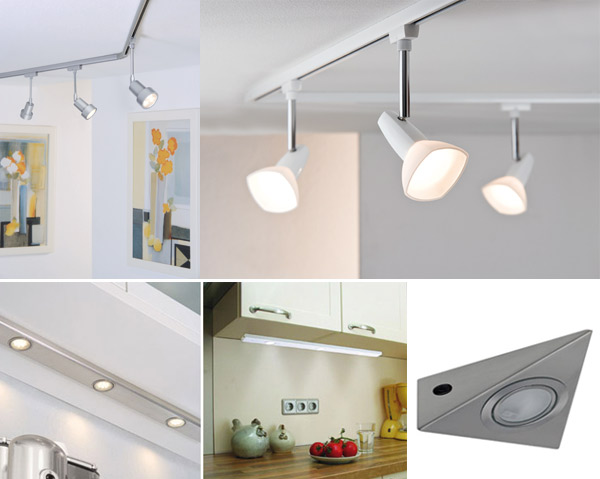
More focused light where we need it, which can be achieved with recessed spots in the fascia above the cabinets,
Concealed lighting running along the underside of the cabinets, so that no shadows fall on the worktop.
General lighting
A common solution for general lighting in the space is fixtures mounted on tracks.
Depending on the size of the kitchen, you can achieve the same result with a ceiling light or a designer pendant.
Useful tips!
• Since the kitchen is one of the biggest energy consumers in the home, it is important to choose fixtures with energy-saving lamps, such as LED or fluorescent.
• When planning the lighting in our kitchen, it is a good idea to take into account how absorbent the materials in the space are. Because most kitchens are built in dark colors, the amount of light needed for ideal coverage may well be up to 40% more than we would use in a light-colored room.
Source: www.flashlight.gr
Kitchen photo: DANELIS
Lighting fixture photos: ELECTROIMPEX S.A.