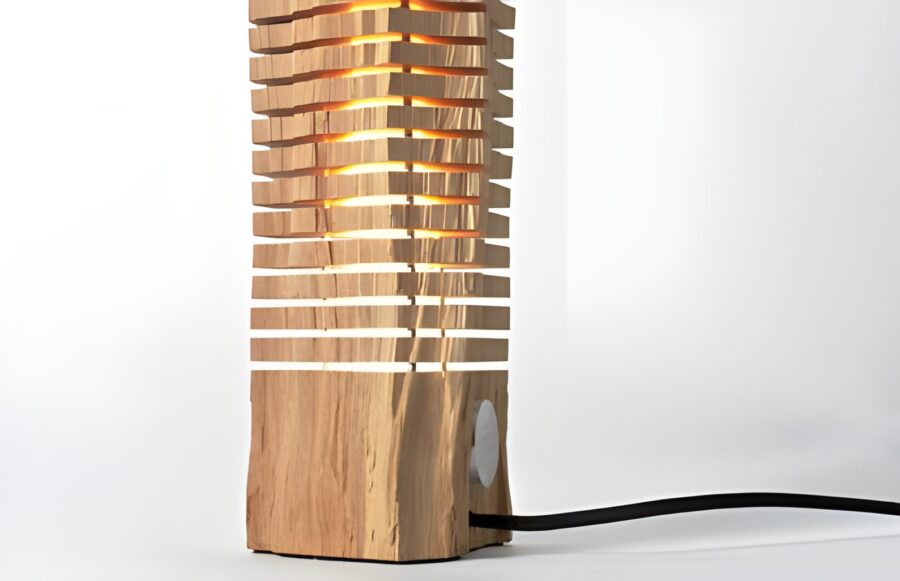
For many years, lighting was a fundamental principle of design. Its rapid development has marked the shift from the practical use of light to architectural lighting design, which calls for a different and less superficial approach from designers, who today have a very rich range of options to choose from. The whole world is waiting to be relit. Museums and exhibitions are a good place to start, because there is no other space like a museum where a lighting system can be shown off so well, emphasising the value of the exhibit while at the same time creating a pleasant environment. In the face of all these new conditions, the world of manufacturing must provide answers, not only by creating revolutionary products but also by delivering complete lighting solutions.

Q: What criteria are used today to characterise the quality of lighting, and how far can they influence the relationship between quality of life and quality of lighting in museum architectural design?
A: There are four basic factors that must always be taken into account when designing lighting solutions: colour temperature, colour rendering, illuminance and glare. Colour temperature, measured in KELVIN, tells us the different colour tones of the various lamps and is very important in achieving the desired result. The colour rendering index tells us how well colours are reproduced. Illuminance, measured in LUX, refers to the amount of light energy reaching the reference plane. Finally, glare can be direct or indirect. In the first case the eye is in direct contact with the lamp, while in the second the light may be reflected off objects such as glass or a table, preventing us from seeing clearly or reading. Good lighting, then, should not only illuminate specific points of interest (works of art) but also the rest of the space, creating conditions of visual comfort. In a museum, therefore, the areas around the exhibits must be lit in such a way that they cause visitors no problems, while the exhibit itself should be lit more strongly so that it stands out.
Q: How much account do you take of a museum’s architectural features when designing a lighting system?
A: The lighting design for a museum cannot be independent of its interior design. The design of the space is the first thing taken into consideration, along with the technical specifications. The height of the space, the construction materials, the decoration, the windows, the structure and the architecture together make up the whole that the lighting study has to address.
Q: Tell us about the basic principles that are taken into account when lighting a museum space.
A: There are no principles specific to museum lighting. In museums, as in shops, for example, the exhibit has to be more strongly emphasised than the rest of the space. One could call that a general principle. That said, museums more often present difficulties because of the extreme fragility of some exhibits. For this reason, techniques have been developed to protect exhibits from every kind of radiation, as well as systems to dissipate the heat produced by lamps. One example is the lighting of the Sistine Chapel museum, where Michelangelo’s fragile manuscripts could not have withstood any lighting from a traditional system. iGuzzini researched and developed a special fibre-optic lighting system for the purpose, which allowed us to get around problems such as radiation and heat.
Lighting systems have also been developed to deal with problems that arise in exhibition spaces where the need for light changes with the exhibit. Take, for example, an art gallery where the exhibits change periodically. Today, temporary exhibitions are more closely tied than ever to habits and culture. There is now a tendency for this kind of space to be lit in a more theatrical way, so the techniques we use are based on theatrical lighting.
Q: How far do buying habits influence the development of lighting systems in this sector?
A: Buying habits and customer requirements are as important to us as architectural design. In the case of museums and exhibitions, customers’ requirements depend on the type of exhibit. Delicate and fragile works of art, archaeological treasures and carpets that must be perfectly preserved all shape demand, in both permanent and temporary exhibitions.
So, when a museum organises an exhibition of works of art, the museum authorities ask us for a technical report on the lighting installation and, after installation, ask us to confirm the study in practice. We lit an exhibition of this kind in Florence: the Mariano Fortuny exhibition, where the textile pieces on display belonged to the United States. We encountered the same thing at the Michelangelo exhibition in Rome where, as I mentioned, we launched a fibre-optic lighting system in cooperation with Vatican officials.
Q: Do the problems you encounter lead you to solutions, or do research and design come first?
A: I wouldn’t say either. Consumer behaviour certainly spurs industry to find solutions. But industry itself also makes many new technologies available on the market. One example is the lighting control systems that have been developed recently: systems that let us operate luminaires remotely from a phone or computer, and technology that lets us maintain a constant level of lighting throughout the 24 hours, giving us security, energy savings and freedom from traditional switches.
Q: When is technology able to offer a more perfect and flexible solution: where natural light is harmonised with artificial light, or where total darkness is lit with ideal light sources?
A: With natural light, there is a difference between old buildings used as museums and newly built museums. Natural light is extremely unstable, in both the quality and the quantity of the light. Today the trend is to stabilise ideal natural light using electronic control systems, which are applied in new buildings. One such case is the MENIL COLLECTION in Houston, designed by Renzo Piano. In old buildings, the ideal would be to exclude natural light altogether. Where that isn’t feasible, as in the Galerie des Glaces at Versailles, it is best to avoid exposing sensitive materials to natural light, although research today has found solutions even for the most difficult conditions.
Q: What innovations can we expect in the near future from research and architectural design, and what share will lighting designers have in them?
A: Today there are high-tech light sources that achieve ideal levels of colour rendering (for example, the new fluorescent lamps with high colour rendering and significant energy savings, and HQI and sodium lamps, which now give colour rendering similar to incandescent lamps while also using electronic starters). Another innovation is the use of high-strength plastics in the manufacture of luminaires and reflectors.
Today, a high level of know-how is available for greater specialisation, although there are still not many professional lighting designers. Just as we attach great importance to interior decoration or air conditioning, we need to come to recognise that lighting study and design are essential too.