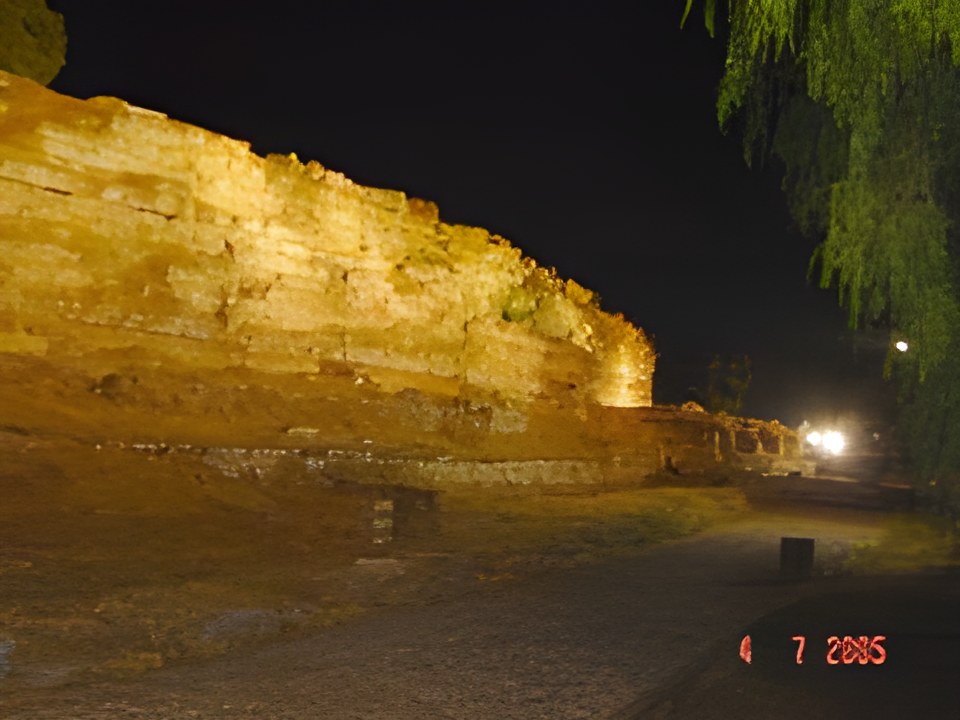
The archaeological site of Eleusis is one of the most important in modern Greece and one of the most sacred of antiquity. The Eleusinian Mysteries were an initiation rite for a select few Greeks, and their true content remains unknown. Every year, at the festival of the Panathenaia, a sacred procession set out from Athens and followed the Sacred Way to this very site, as is also depicted in the sculptures of the Parthenon.
In modern times, the remarkable Thriasian Plain and the beautiful Saronic Gulf were badly degraded. For decades the lovely town of Eleusis remained an ecologically and residentially blighted working-class town, suffocatingly surrounded by dozens of factories, refineries, shipyards, warehouses and scrapyards. The award-winning film/documentary “Agelastos Petra” sets out, with visual mastery and emotional power, the interwoven stories of the town and its antiquities during those decades.
In recent years, however, Eleusis has undergone a significant improvement in quality. The Saronic is no longer the dead swamp of the 1970s and 1980s. Local government and the state have committed themselves to improving living conditions for the inhabitants of the Thriasian Plain, polluting industries are gradually being moved out, the town’s seafront has come back to life, and Eleusis is now an attractive leisure destination for Athenians within the city walls.
Some of the area’s large companies are trying to repay the people of Eleusis for the hospitality they have enjoyed over the years. In that spirit, the cement company TITAN SA, which began operating only a few hundred metres from the archaeological site, offered, among its other social activities and sponsorships for the town, to fully sponsor the lighting of this important site, in honour of its founder and former chairman, Leonidas Kanellopoulos.
To this end, TITAN SA’s Chief Executive Officer, Mr Papalexopoulos, secured the services of the internationally renowned French lighting designer Mr Pierre Bideau to prepare the preliminary study and lighting proposals. The study was approved by the Central Archaeological Council and the Ministry of Culture in 2004, and Mr Bideau’s collaborator, the mechanical engineer M.Sc. Kostas Kapos, undertook the final implementation design on which the project would be carried out, exactly as was done for the lighting of the monuments of the Acropolis.

This project had several particular features compared with the lighting of the Acropolis monuments. Over the centuries the site was exposed and accessible to far more people, and therefore unprotected, since it did not have the good fortune to stand on a rock, as the Acropolis does. The damage it suffered over the centuries has left no intact building that could be highlighted with night lighting. In addition, excavations in the surrounding area have uncovered a large number of finds (architectural members, sarcophagi and so on), which have been moved inside the archaeological site for protection.

The lighting designer’s job is to draw the viewer’s eye to certain specific elements that bring out a building or a landscape, and to let viewers make their own “reading” according to their personal aesthetic judgement. In this case, however, the archaeological site of Eleusis is an (almost) flat expanse strewn with architectural members, overlooked by the hill with the Ploutonion cave and the historic little church with its bell tower.

A further factor to be taken into account was the (reasonable) requirement of the archaeologists that there be no cables inside a site that is subject to continuing excavation. The lighting design was therefore based on the following philosophy:
The site would be lit from its perimeter, from selected points where groups of floodlights would be installed
• Two types of crossing light beams would be used, one with a relatively “cool” white light (4200°K) and the other with a “warmer” one (3000°K). In this way each architectural member would be lit from two sides with white light of a different tone, bringing out its relief for the viewer.
• The lighting would aim to present an image to viewers moving outside the perimeter of the archaeological site; otherwise it would be dazzling for a visitor inside the site.
• The lighting would aim to highlight the archaeological site as a whole (an area of roughly 35 stremmata, or about 3.5 hectares) and the hill above it, rather than any particular monument or building.
In all, thirteen (13) points on the perimeter were chosen to host the floodlight groups. Each point comprised 6 to 18 Philips Decoflood MVF 606 or 607 floodlights, fitted with Philips CDM-T ceramic metal halide lamps of 150W, with white colour rendering at 3000° or 4200°K. The same floodlights were used on the Acropolis monuments and are noted for their excellent luminous efficiency and low power consumption. A total of 117 floodlights were installed around the perimeter of the archaeological site, with a total rated power of 17.55kW.
The floodlights are powered from three separate three-phase PPC (Public Power Corporation) meters on the perimeter of the archaeological site, so that the maximum cable length does not exceed 180 m and the maximum cable cross-section is no larger than 5X4mm².
The lighting is switched on and off from the main guardhouse, by means of a 3-frequency wireless remote control that allows each power supply point to be operated selectively and separately.
In total, five (5) floodlight poles were built, 6.50 m high with a Φ.200 cross-section, anchored with bolts into wide, shallow concrete bases (to avoid damaging any buried ancient members), which were then covered with soil from the surroundings. Nine (9) Π-shaped supports were also built from 60X60mm hollow section, 400-1500mm in clear height, with 1 or 2 rows of floodlights, likewise set in concrete to a maximum depth of 400mm and at points where there was no problem.

Each lighting point was additionally earthed to an earth electrode, and all points were bonded to the installation’s earthing system for greater safety. The wind-load resistance of both the poles and the Π-shaped supports was designed to exceed 200km/h, while all the floodlights have an ingress protection rating of IP-65, which keeps them watertight even against a direct jet of water from any angle.
The final positions of the lighting points were chosen by the lead designer and supervising engineer, K. Kapos, in cooperation with the archaeologist in charge, Ms Papangeli, and the engineers of the contractor (Alexandros Technical SA), the main criterion being the ability of the beams to cover the widest possible angle. For 4 days before the official switching-on of the lighting by the Deputy Minister of Culture, Mr Petros Tatoulis, on 5/7/05, a series of exhaustive tests and adjustments was carried out, ensuring the desired lighting result and winning favourable comments from the residents and authorities of Eleusis.
The contribution of the town’s municipal services, of TITAN SA’s engineers in charge, Messrs Dedes and Kosmoglou, and of the engineers of Alexandros Technical SA, Messrs Vlachos and Zervas, was invaluable throughout the works, and the cooperation of all the bodies and individuals involved was impeccable and creative.
Mr Kostas Kapos is now working on the lighting design for the Theatre of Dionysus at the foot of the Sacred Rock of the Acropolis, which will be implemented next September as a sponsorship by Philips Hellas SA.
We will return to this subject in a forthcoming article.