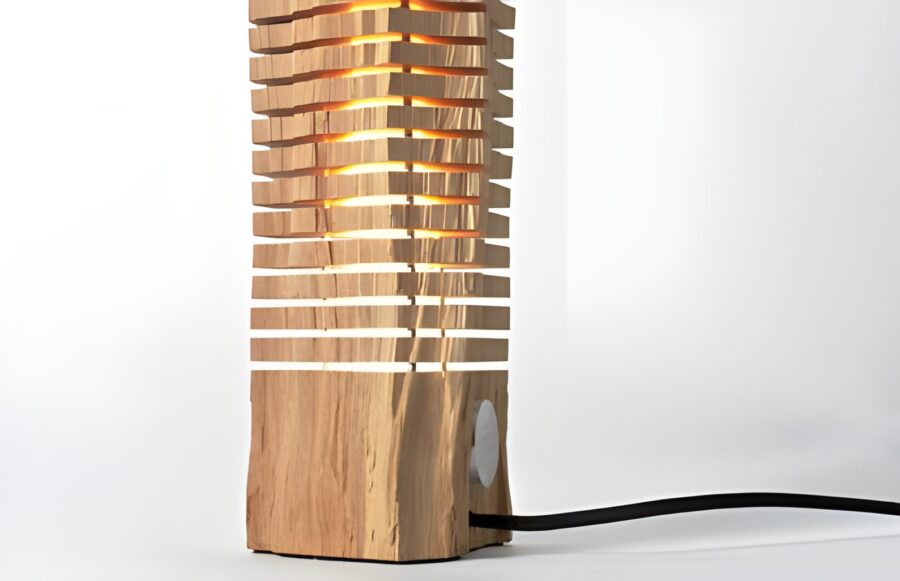
Until a few decades ago, urban lighting in Greece amounted to nothing more than an ordinary incandescent lamp under a small tin shade, fixed to the poles of the Public Power Corporation (ΔΕΗ). The technique has survived to this day on some islands and in traditional settlements, and may well be the most suitable way to light the alleys between the traditional buildings of these areas. For that reason, mainly for the sake of aesthetics and tradition, it should not be changed.
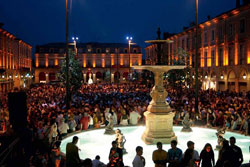
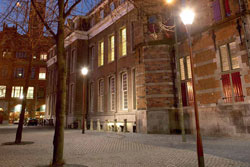
The term “urban lighting” is relatively new in Greece. Public bodies still call it “street lighting” in the projects they put out to tender, placing it in the same category as the lighting of arterial roads and motorways. But as we shall see below, the requirements of an urban lighting installation differ from those of safe motorway lighting.
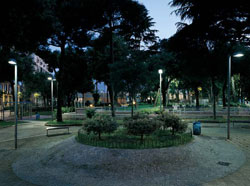
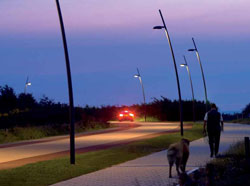
We define urban lighting (a direct translation of the English term) as the installations intended to light the surroundings within an urban fabric, where people, cyclists and vehicles move at low speeds. In other words, it is the lighting of:
• Pedestrian streets
• Building surroundings
• Parks
• Squares
• Gardens
• Suburban roads
In this article we will look at what technology offers for designing an effective and aesthetically acceptable urban lighting installation, as well as the rules that govern such design. Road lighting is a separate subject that we will need to address in future articles.
HISTORICAL BACKGROUND
The history of urban lighting begins long before the Industrial Revolution. Archaeological finds from classical Greece and Rome show the first attempts to keep the darkness, and the fears it provoked, outside the cities. Torches, oil lamps, bonfires and anything else that could produce light helped passers-by feel safer from the dangers of the night.
The Industrial Revolution and the resulting urbanisation of the population called for more systematic efforts to light the streets, mainly for reasons of safety, although the gas lamps of city centres were far from the ideal lighting that would have deterred crime. Nineteenth-century literature gives us a vivid idea of the conditions that prevailed at night in the alleys of London or Paris.
The establishment of the incandescent lamp brought a real revolution to the development of urban lighting. Paris was the first European capital to install thousands of lamps in its streets, earning the title of the “City of Light” and at the same time dramatically reducing the number of criminal attacks. From the end of the 19th century and for the next 60 years there were no dramatic changes in urban lighting technology. The incandescent lamp was perhaps the only light source, and no serious effort was made to build efficient luminaires; the emphasis was mainly on their appearance.
High-intensity discharge (HID) lamp technology was the second revolution in the development of urban lighting. A typical incandescent lamp delivers about 8–10 lm/W (lumens per watt of electrical power consumed), whereas an HID lamp (sodium or mercury vapour), even one of what is by today’s standards outdated technology, delivered 40–75 lm/W, five times the light output.
The drawbacks of these new lamps were the higher cost of the luminaires and lamps, the “dead” time needed between switching off and restarting the lamps, and a lower colour rendering index (CRI) than incandescent lamps. With 100 as the value for sunlight, the CRI is 90–95 for an incandescent lamp and 25–45 for a sodium or mercury HID lamp. However, the considerably higher luminous intensity for the same electrical consumption was the decisive factor that led HID lamps to gradually displace incandescent lamps in urban lighting installations. HID technology also developed to the point where some of these lamps (low-pressure sodium) reach up to 200 lm/W.
Another unfavourable effect of the widespread use of HID lamps was a significant increase in reactive power in the networks, caused by the strong inductive currents generated when these lamps operate. This problem was gradually eliminated, however, by fitting capacitors in the luminaires or using other power factor (cosφ) correction devices.
At the same time, the development of fluorescent lamps was confined mainly to the interior lighting of buildings, and they did not become viable for urban lighting installations until recently. Many of the luminaires now on the market use “energy-saving” lamps, or Compact Fluorescent Lamps (CFL), to give them their proper technical name.
Over the last five years there has been a rapid spread of ceramic metal halide lamps, the CDM type. Although these lamps belong to the HID category, they have excellent colour rendering (CRI 80–90) and offer an ideal solution that combines low consumption with intense, high-fidelity light.
In Greece, public and municipal authorities have adopted many urban lighting solutions that, unfortunately, are mostly unsuitable. Even in projects being built today, in most cases there is no check for compliance with the European and Greek guidelines in force, and no competent authority exists to limit light pollution in the cities where we live.
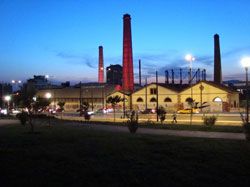
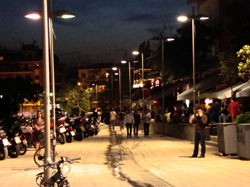
The legislation in force on public and municipal works does not allow the designer to specify precisely the luminaires he considers suitable for carrying out his design. As the project nears completion, they are most often replaced by cheap, poor-quality luminaires that lack the right photometric characteristics. Nevertheless, more and more engineers and architects are showing an interest in learning about the solutions and tools available for designing a sound urban lighting installation. This article cannot, of course, cover the full range of information an engineer needs, but it will try to move in that direction. The author hopes we will soon see significant improvements in the way these installations are designed and built.
PRELIMINARY DESIGN
The basic principle in designing an urban lighting installation is always the designer’s idea and vision. First of all, the designer must decide what “atmosphere” he wants to create, and that naturally depends on the setting.
An urban lighting design should preferably take as its main guide the European standard CIE 136-2000, “Guide to the Lighting of Urban Areas”. For the lighting of pedestrian and cycle routes in particular, the following conditions must be met to make movement easier:
• They must be able to orient themselves visually within the surroundings
• They must be able to see obstacles in their path
• They must be able to perceive the movements and intentions of other people
• They must be able to read street signs
• They must be able to recognise various landmarks, litter bins, kerbs, fire hydrants and so on
• They must be able to enjoy the appearance of the street and its surroundings.
For this reason, the various lighting solutions must be calculated not only for horizontal illuminance at ground level but also semi-cylindrically, at a height of 1.50 m, thereby simulating a person moving through the environment.
Moreover, although the effect of glare must be controlled according to the guidelines of CIE 115-1995, a pleasant atmosphere must still be ensured for the pedestrian. A slight amount of glare may therefore be accepted for this purpose, so that people can make out the trees, shrubs and other objects around them.
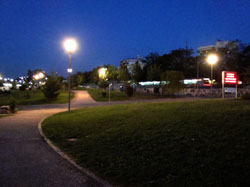
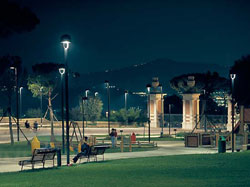
The colour rendering of the light source has a major influence on the lighting result and is therefore an important parameter in lighting design, as set out in specification CIE 94-1993 (Guide for floodlighting). According to recent studies, for the same illuminance levels in a space, the surroundings are perceived much better when they are lit by lamps with a high CRI (> 80).
Placing luminaires among trees is another important parameter, and its principles are set out in specification CIE 32-1997. In general, and in accordance with the above specifications, the minimum illuminance levels to be achieved in pedestrian areas in parks are as follows:
EH avg = 5.00 lux, EH min = 2.00 lux, ESC min = 2.00 lux
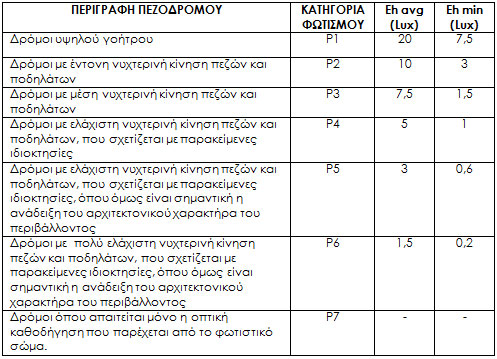
It is nevertheless possible to apply a different specification, such as the one given in the standard CIE Publication No. 115, “Recommendations for the lighting of roads for motor and pedestrian traffic”, which recommends lighting classes according to the table below:
It goes without saying that observing the above specifications ensures that light pollution will not have unwanted side effects on the local ecosystem. In any case, the relatively low height of the poles usually chosen for urban lighting installations (3.50–5.00 m), together with the reflectors and shielding of the luminaires, should ensure that no light spills towards the sky or onto the higher branches that shelter birds in a planted area. That is why the unsightly “globes” that have filled our squares and parks are considered entirely unsuitable.
Finally, the luminaires chosen must be highly resistant to vandalism and mechanical stress (IK rating 9–10) and have a high degree of ingress protection (>IP65).
PHOTOMETRIC ANALYSIS TOOLS
Today we have at our disposal a wealth of lighting tools and products to help us realise our ideas in designing an urban lighting installation. Also, as mentioned above, there are now a good many technical guidelines from the competent European committees that guide us on the rules to follow for a safe, functional and aesthetically accomplished installation.
Some very good programs for lighting calculations for interior and exterior spaces are available free of charge on the internet. They are constantly being improved and can help the designer determine illuminance levels according to the type and layout of the luminaires chosen. Programs such as Calculux, Relux and Dialux accept luminaire libraries from most of the major lighting manufacturers. These libraries are also available free of charge on the manufacturers’ websites and are invaluable aids in preparing a lighting design. The programs provide detailed data and graphs of the illuminance achieved in the surroundings or on the road, based on the geometry, colour, material and texture the user specifies for each surface. Even so, once construction is complete, it is advisable for the designer to take on-site readings with a simple light-measuring device (a lux meter), in order to verify and calibrate his calculations for future designs.
CHOOSING LUMINAIRES
As mentioned above, every major luminaire manufacturer in Europe offers a wide range of products and lighting fixtures capable of achieving the desired lighting result and the “atmosphere” the designer wants to create. Whichever manufacturer is chosen, then, the design should focus on selecting characteristics that satisfy the following basic parameters:
A. PHOTOMETRIC CHARACTERISTICS OF LUMINAIRES
The photometric characteristics of a luminaire concern the way it distributes the light produced by the point source (the lamp). A lighting fixture must therefore be chosen that distributes light correctly over the surfaces we want to light, without large variations in illuminance levels, and that controls the spread of light into the surroundings so that it does not cause strong glare for the observer.
There are different types of reflector for lighting road or square surfaces. Louvred fixtures are also available for lighting the surroundings in squares or parks, as well as sandblasted or opal glass bowls that allow the light to diffuse evenly into the surroundings where this is required.
In general, an effort should be made to avoid excessive lighting of surrounding buildings, which would disturb the residents, while a light diffuse illumination is considered necessary.
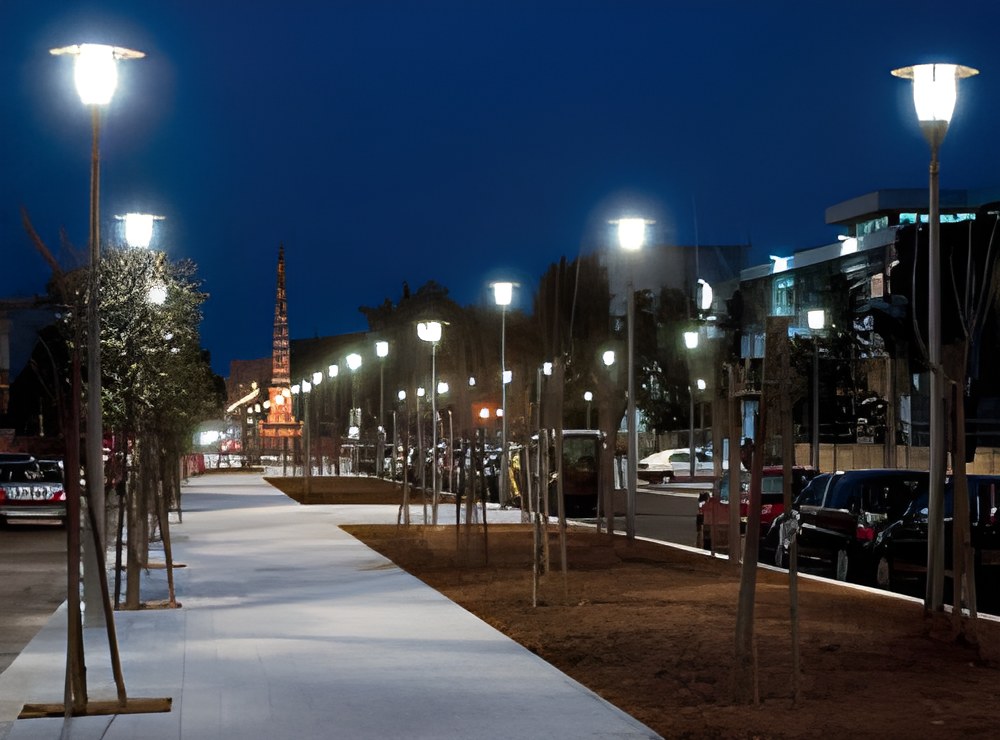
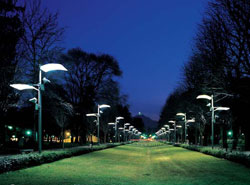
Another important point is that luminaires should be chosen so that they do not have to be placed too densely in the space, because a “forest” of lighting poles will irreparably spoil the character of that space.
B. AESTHETICS OF LUMINAIRE AND POLE DESIGN
The aesthetics of the luminaires themselves should not differ from the aesthetics and architectural character of the surroundings.
An overly modern luminaire, however clever its design and however innovative its materials, will look completely out of place and aesthetically “offensive” in an area of old, stone or listed buildings. Conversely, a small brass lantern, a copy of an old gas lamp, on a carved cast-iron pole will look foreign when placed in the grounds of a modern shopping centre or hotel.
The designer should also consider that many manufacturers can deliver their luminaires and the accompanying poles in a choice of RAL colours that will “blend” with the colours of the surroundings.
One important piece of advice for a new designer would be to visit manufacturers’ exhibitions and get an idea of the real size of luminaires, which is always larger than one imagines when choosing from a catalogue. That way he will avoid unpleasant surprises when the luminaires are delivered to the site.
C. TECHNICAL CHARACTERISTICS OF LAMPS
Choosing the lamps is perhaps one of the most important steps in designing an urban lighting installation. As mentioned above, technological progress offers us a wealth of solutions, although in the vast majority of cases, in recent years HID ceramic metal halide lamps of the CDM type have prevailed.
Most lamps of this type used in urban lighting installations are rated at 70, 100 or 150 W, with an output of about 6,000, 9,000 or 13,000 lumens respectively. They are produced with different cap types, depending on the luminaire (G12, E27, TD), and have very satisfactory efficacy and lifetime (about 8,000–10,000 hours, which translates into 4–5 years of operation).
In fewer cases, lamps of this type rated at 20 and 35 W are used (mainly in bollard-type lighting columns), or 250 W in tall street-lighting poles (>10 m).
These lamps have very good colour rendering (CRI = 80–90) and emit white light at a colour temperature of 3000 K (a warmer tone) or 4200 K (a cooler white light). The choice of lamp colour is very important for the final result, and as a general rule the following should be observed: “warm, earthy surrounding materials (soil, earth tones, porous stone, etc.) = warm light” and, correspondingly, “cool surrounding materials (marble, granite, grey stone, concrete, etc.) = cool light”.
Another type of lamp, used less often, is white sodium (SDW type), which renders white in the tone of an incandescent lamp (2700 K), but with slightly poorer colour rendering and lower luminous intensity than CDM lamps of the same power.
In low bollard-type lighting columns with an E27 cap in particular, it is common to fit CFL energy-saving lamps, mainly rated at 18–25 W. When the designer makes this choice, it is advisable to select lamps with a 830 colour code (3000 K). These lamps have the advantage of restarting immediately after a momentary power cut.
Halogen incandescent lamps should be avoided because of their high energy consumption and short lifetime (~2,500 hours), although they have an almost perfect colour rendering index. Nevertheless, since, as mentioned above, HID lamps need about 4–7 minutes to restart once they have gone out, in areas where safety is an important factor it is advisable to install in parallel a small number of luminaires with halogen lamps, which will come back on immediately after a momentary power cut (from a voltage drop or a lightning strike).
Solid-state technology promises significant advances in light-emitting diodes (LEDs). For the time being, however, apart from a few major manufacturers that offer LED products mainly for architectural lighting, urban lighting has not benefited greatly from the availability of such products, other than some marker luminaires on the market. But given the extremely low consumption of LEDs and their long lifetime (50,000–100,000 hours), we are sure to see more urban lighting products available soon, although their cost is currently prohibitive for the required illuminance levels in most applications.
D. CONTROL AND ENERGY-SAVING DEVICES
There are both stand-alone and dependent systems for switching an urban lighting installation on and off.
Stand-alone systems operate either manually or with the help of photocells and timers, which activate the supply relays of the circuits.
Dependent systems operate on a specified signal from a third-party provider, such as ΔΕΗ, which carries a ripple-control frequency on its network for switching street lighting on and off.
Energy-saving devices with electronic ballasts and lamp dimming systems are also on the market, so that after a certain hour, when traffic has dropped to a minimum, the lighting can be reduced to 80% or even 50%, with significant savings in the energy consumed. Because of the advanced technology of electronic ballasts, these devices also give the lamps in an installation a longer lifetime. The designer must always calculate the cost of such an investment, however, and how far it can be recouped over the life of the installation.
EPILOGUE
A single article cannot cover all the parameters, rules and aesthetic choices that should govern the design of an urban lighting installation. Nevertheless, with what is set out here, the author hopes to have given some idea of how important the subject of “urban lighting” is and how neglected it has been in Greece until now. Let us hope that this situation will change in future, with the help of everyone involved in its design and implementation.
Kostas M. Kapos
Mechanical Engineer, M.Sc./PE
Architectural & Urban Lighting Designer
kapos@tee.gr