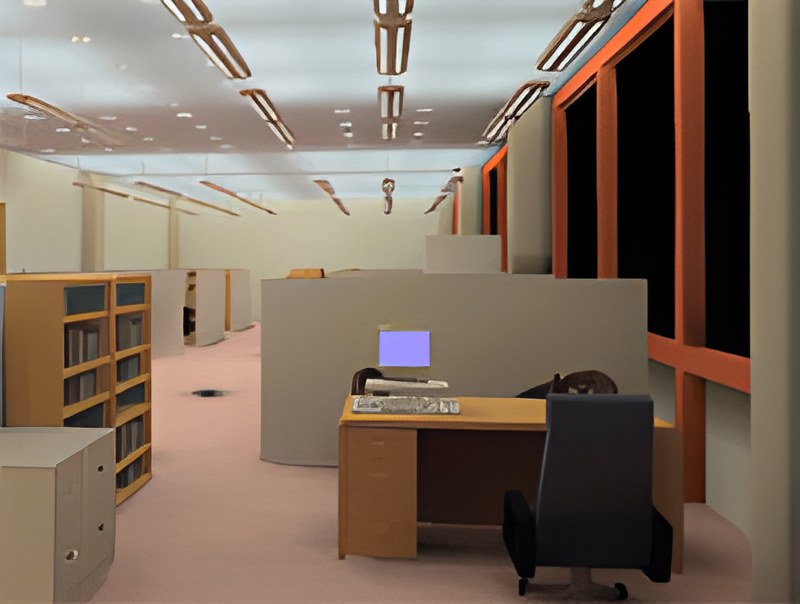
Glare is the uncomfortable brightness that comes from the light sources in a space and reaches our eyes, making us feel discomfort. It may come directly from the luminaires, or indirectly from reflections on monitors, glossy surfaces and objects. People can perceive glare, but officially it cannot be measured and has not been defined.
To control this unwanted effect, our options are:
– Use luminaires with deep reflectors, so that direct sight of the lamps is avoided.
– Use indirect lighting systems.
– Distribute the luminaires in the space so that the workstations are not affected by glare.
– Carry out the design of the space with a VPC (visual comfort probability) program on our computer. This is possible if you work with a company that has carried out photometric measurements of the luminaires it produces. In these programs, the space is modelled in 3D with all its equipment, colours and surface reflectance values. Knowing the brightness emitted by the lights, the software calculates an approximation and gives us the result we want.
Whether to use light-coloured and glossy furniture in the space is a matter that calls for discussion, as opinions on the subject are divided. On the one hand, it is recommended because the reflections of light on objects create the impression of uniform lighting in the space, with only small variations. This requires less light output from the luminaires and therefore means lower energy consumption.
The other view is that we should avoid this and choose absorbent materials instead, because reflections on surfaces are tiring. To give the right impression of lighting in the space, it holds, we should light walls and similar surfaces from the ceiling, and under no circumstances use vertical lighting.
The type and colour temperature of the lamps most widely used in workplaces at present are fluorescent lamps at 3500 Kelvin. Lamps at 3000 K are used only when we need low lighting levels, or when they will be mixed with incandescent or halogen lamps, which means we want to keep a warm feel in the space.
It is a fact that office lighting, as we have described it in the three articles we have published, is rather uninteresting aesthetically. Which of us likes flat lighting with no visual effects in the space? Probably none of us…
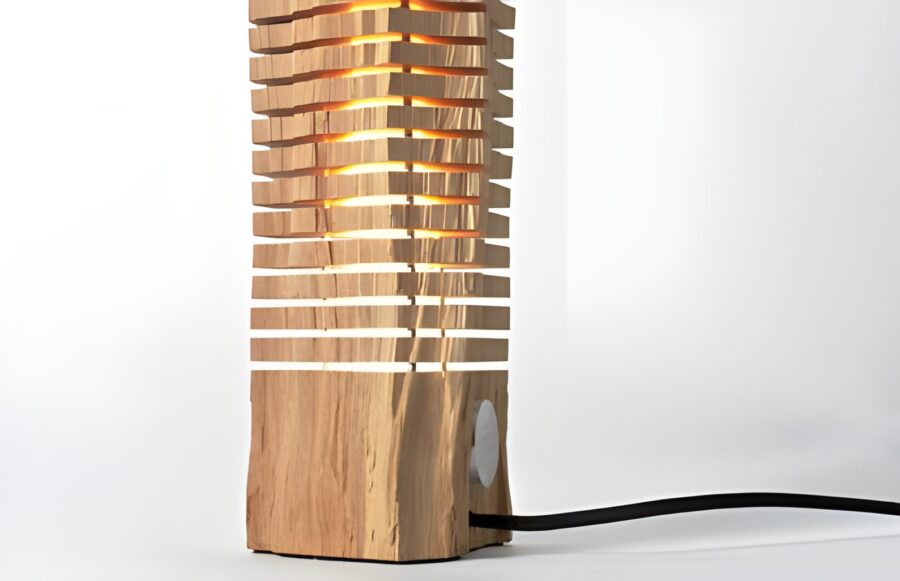
So the use of decorative luminaires, which companies offer in abundance, is definitely recommended, allowing us to create atmosphere and add our own personal touches to the space. We simply need to use them in moderation and take into account everything we have said so far.