The beforelight team was formed in the winter of 2007 in Thessaloniki by nine graduates of the Department of Theatre Studies and the Department of Architecture at the Aristotle University of Thessaloniki (Eliza Alexandropoulou, Dimitra Aloutzanidou, Christina Ampatzidou, Konstantina Evangelou, Kelly Efraimidou, Dimitris Theocharoudis, Maria Lazaridou, Vasilis Ntovros, Irini Steirou).
The team’s artistic work includes lighting design for theatre productions, installations and performance events, as well as architectural lighting design for interior and exterior spaces.
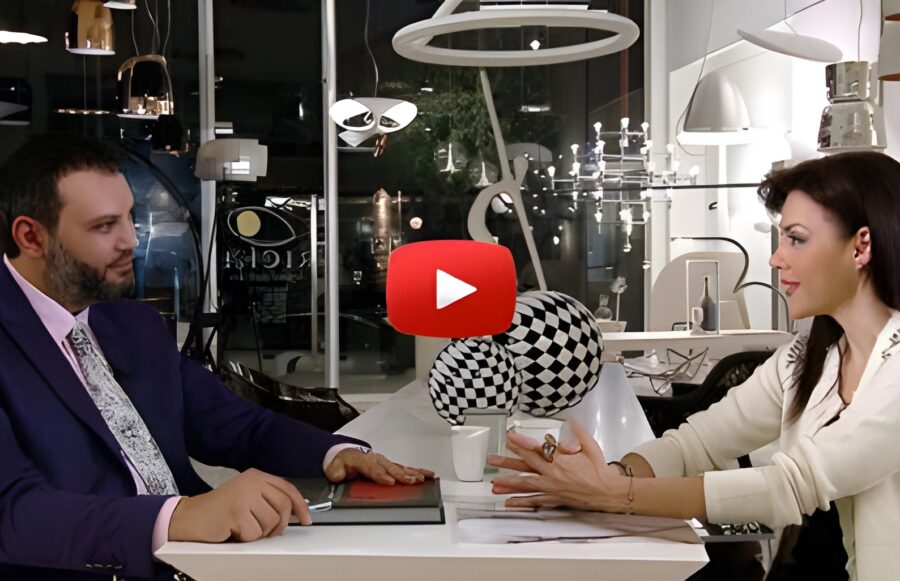
In an interview given to our online magazine, they talk about the team’s structure, its activity and its “positions”.
F: What are the team’s activity, philosophy, motivations and goals?
BL: The team’s activity is designing and experimenting with light in all its manifestations and forms. For the most part, we take part in festivals, cultural events and art exhibitions with light installations or performance events that encourage the public to observe light and interact with it.
From time to time we have also worked as lighting designers for theatre, dance and music performances, and as designers of alternative architectural lighting. The team’s aim is a diversity of activities, experimentation with lighting tools, and a continuous, consistent presence in the visual arts and design field of lighting.
F: The team is made up of members “with an artistic and architectural education”. What inspired you and led you to take up lighting design?
BL: Our first, and decisive, contact with the subject came in Eleftheria Ntekou’s theatre lighting course in the Department of Theatre Studies at the Aristotle University of Thessaloniki. The good chemistry between us and a strong shared interest, light, pushed us to form the team.
F: Your work to date suggests a purely artistic approach, “playing with light”, rather than an architectural one. Is this a result of circumstance, or a “point of view”?
The circumstance is that we come from different but connected fields of knowledge. Among us there are architects, set designers, theatre scholars and directors, so each member’s work brings different concerns and knowledge to the table.
BL: An art installation can retain its “architectural quality”, and the reverse is true as well. We avoid putting labels on the way we approach any creative problem. It is an open process with an unpredictable outcome.
F: On your Facebook page you write that “the team was formed in 2007” and then that it “is still being formed”. Do you mean that you accept new members? If so, what are the criteria for joining?
BL: “Still being formed” means we are still learning, experimenting and playing with light, exactly as we did at the beginning.
We are not taking on new members, but we are very open to outside collaborations. The current line-up is going through a process of creative fermentation, so adding new members would slow that process down considerably.
F: How would you describe the lighting work carried out in Greece in recent years?
BL: In recent years there has been a degree of growth and interest in lighting. In theatre design in particular, the process has changed noticeably. A group of distinguished designers introduced lighting and elevated it to a defining part of the theatrical production.
In architecture, we see that the handling of natural and artificial light is becoming a mark of identity in buildings and public spaces. The ability of lighting design to change and evolve contributes to this. It is a “living” part of the design.
F: In your opinion, what would make a lighting project today a successful one? Do you think there are both objective and subjective criteria in evaluating it?
BL: There are certainly objective criteria, depending of course on the type of project, and they have to do with the technical quality of the work. Not necessarily whether modern technical means were used to build it, but whether its technical nature serves, without overshadowing, the purpose of the work, that is, its artistic nature.
We would define a successful work as one that is technically and visually accomplished and original, takes the wider environment into account, and engages the gaze, or even the participation, of the viewer or passer-by. Nevertheless, there are no exact specifications for a lighting project that will resonate with people.
F: In your opinion, how can “theatrical lighting” be applied in a space used every day (a home, an office, a shop, etc.), and what can it add?
BL: Theatre equipment can only be applied with difficulty in a space used every day, both because of the different nature of the power supply available and because of its different purpose.
It is a fact that an energy-efficient way of lighting in the theatre has still not been found. However, lighting can be “designed” the way it is designed in the theatre, that is, within the framework of a “staging” that you are serving, using non-theatrical lighting tools (architectural lights, fluorescent lamps, globe lamps, etc.).
In this way, you can give a corner a sense of theatre, with more intensity, for example; change the mood of your space by doing away with the conventional ceiling light; change the colour of the light in your office to one that relaxes you; build a small lighting installation in your shop that also serves a “commercial” purpose; or light an abandoned urban space and fill it with people again.
www.beforelight.gr (celebrate light respect darkness)