The energy cost of lighting in the average Greek home is around 17% of total energy consumption, or about €134 per year.
To understand how significant the energy cost of lighting is, it is enough to note that over the life cycle of a home, lamp replacement accounts for about 3% of the cost, while electricity accounts for about 86%.
There are many types of lamp for different applications, such as halogen lamps and sodium vapor and hydrogen vapor lamps. In the home, however, the most common are standard incandescent lamps, fluorescent lamps and electronic energy-saving lamps. One of the most important factors in saving energy in lighting installations is choosing the right lamp for each lighting application, as well as the right accessories.
EU Directive 98/11/EG was adopted into Greek law in September 1999 and provides the legal framework for classifying lamps for household use. Using a standardized calculation method, lamps are placed in different energy consumption classes, from class A for the most economical to class G for the most energy-hungry. The purpose of this classification (A-B-C-D-E-F-G) is to inform consumers by making energy-efficient lamps immediately recognizable to anyone considering a purchase.
Incandescent lamps
xml:namespace prefix = o /
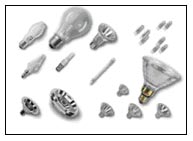
Incandescent lamps are cheap to buy and maintain, their light output is easy to control, and they offer excellent color rendering. They light instantly, can be restarted immediately while hot, and work without problems in any position (horizontal, vertical or diagonal).
Fluorescent lamps
Fluorescent lamps have a higher luminous efficacy than incandescent lamps (about three times as high), and their life exceeds 6,000 hours.
Energy-saving lamps
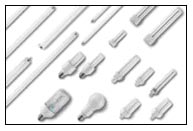
For the same level of brightness as standard incandescent lamps, modern energy-saving lamps last 10 times longer (10,000 hours) and use one fifth of the electricity. They cost more to buy, but the overall financial benefit over their lifetime is considerable, thanks to their low power consumption and longer life (1 low-energy lamp is equivalent to 10 standard lamps).
Some simple measures for saving energy in the use of lamps are as follows:
When buying a lamp, compare power consumption using the figure on the label, because there are big differences between the various types of lamp. In spaces where the lights are on for long periods (kitchen, living room or outdoor night lighting), energy consumption can be cut by about a factor of 5 if standard incandescent lamps are replaced with low-energy lamps. They may cost more, but they are much cheaper to run and last longer.
Below is the equivalence between the wattage of a low-energy lamp and that of a standard lamp for the same level of lighting.
Low-energy lamp – Standard incandescent lamp
5W ——–> 25W
7W ——–> 40W
11W ——–> 60W
15W ——–> 75W
20W ——–> 100W
23W ——–> 120W